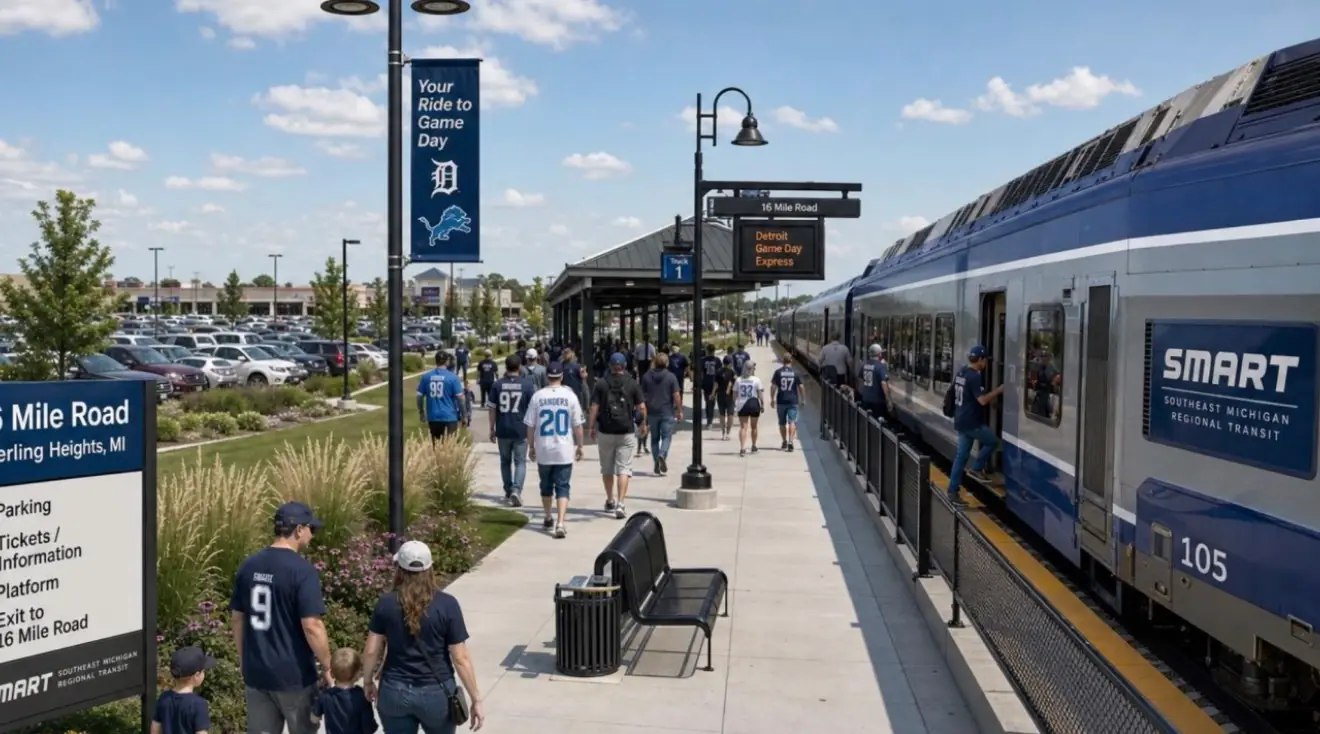
Over the past few days, there’s been tons of viral news about a potential passenger rail service from Sterling Heights to Detroit. So, what’s actually going on with this proposed train?
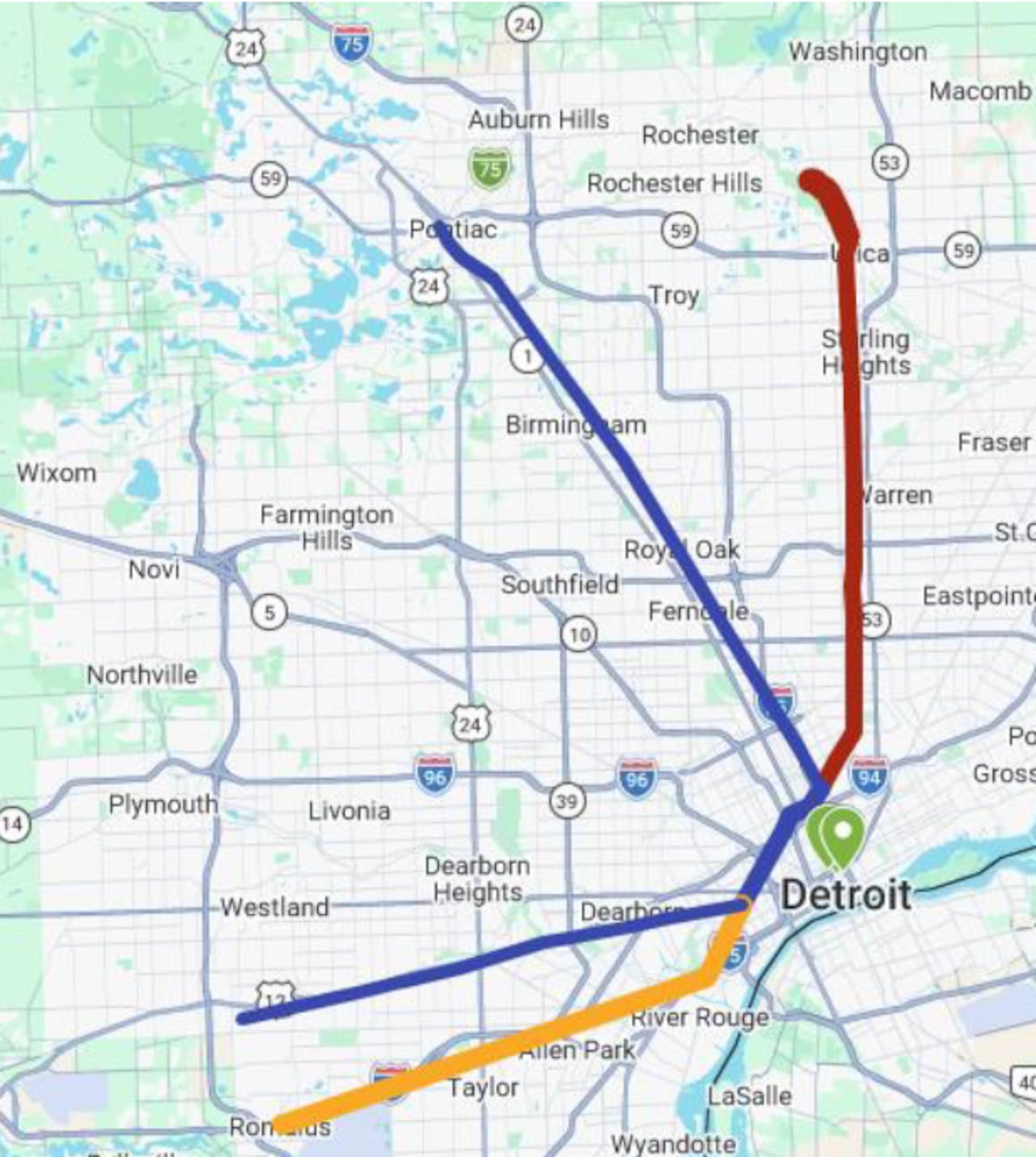
Last week, the office of the Sterling Heights City Manager presented a white paper to Sterling Heights City Council on the importance of preserving the Conrail rail corridor between Sterling Heights in Detroit. (The Conrail tracks run north-south between Mound and Van Dyke.) As part of this call, the paper also considers passenger train service on this line – which could connect Macomb County with downtown Detroit, Metro Airport, and Amtrak trains to Chicago.
The white paper’s primary focus is urging Sterling Heights to preserve the existing tracks on the Conrail corridor. Currently, Conrail has begun removing some track north of 22 Mile since it is unused and expensive to maintain.
The Detroit area has numerous railroad corridors that are only used for freight traffic, but many of these routes once carried passenger trains. As the study points out, rights-of-way like this Conrail corridor are difficult to create in a built-up region like Metro Detroit. Once rail is removed along these corridors, it rarely comes back.
However, the white paper also talks about the feasibility of passenger rail on this corridor, and goes into some detail about what this service could look like.
Hourly regional rail included in proposal
The study discusses an hourly, regional rail service to downtown Detroit. Preliminary proposed stops include 8 Mile, GM’s Warren Tech Center (12 Mile), and the Velocity Center near 18 Mile, as well as the existing Amtrak station in Detroit’s New Center.
The study is also considering a connection to Metro Airport (which could include Wayne County stops like Dearborn and Wayne), as well as travel to Chicago (which could be accomplished by routing some Amtrak Wolverine trips to Sterling Heights instead of Pontiac, or through a transfer at the Detroit station).
If we want this train, we need to act
While the news has generated a great deal of excitement, this study is just the first step in a long process to actually establish rail service. As the paper points out, City officials would need to work with the Michigan Department of Transportation (MDOT) to conduct a proper feasibility study to estimate costs, conduct engineering and environmental review on proposed stops; work with Conrail to come to an agreement and upgrade the rail corridor for passenger service; and, crucially, work with the Regional Transit Authority (RTA) to secure capital and operating funding.
However, this white paper could be the first step in that multi-year saga. For two decades, our region has discussed restarting regular rail service on the Ann Arbor-Detroit regional rail. The first step in that process was a preliminary study conducted by the Southeast Michigan Council of Governments (SEMCOG), which led to the inclusion of that service in the RTA’s 2016 regional transit proposal. Sadly, of course, that proposal was narrowly voted down, but it was supported by voters in Wayne and Washtenaw County, and it’s a conversation that’s ripe to be restarted.
It’s high time for other existing rail corridors in the region to be considered for passenger service as well. The Pontiac-Detroit corridor, already serviced by Amtrak’s Wolverine, is another promising candidate, as is the Groesbeck rail corridor between Detroit and Mount Clemens. But for any of these rail connections to happen, they need local officials to champion them – as Sterling Heights leaders are doing with this project.
It’s also unlikely that any of these projects will come to fruition without more dedicated local funding for transit – which most likely means, in practice, passing a regional ballot measure.
Since 2016, TRU has advocated for giving the region’s voters another chance to fund transit through the Regional Transit Authority. That hasn’t happened at a regional scale, but in 2022, Oakland County voters took a major step forward by passing a countywide transit funding measure. Wayne County voters followed suit this August, and Macomb County voters just renewed their countywide transit millage in the November election with a 65% majority.
Clearly, there is growing public interest in expanding regional transit – but we need our elected officials to give us the opportunity, most likely by placing another RTA measure on the ballot in 2028 or 2030. (Currently, the RTA’s authorizing legislation only allows a vote in an even-year November election.)
If we want this project and others like it to become reality, we need to fight for it. If you’re in Macomb County, ask Macomb County Executive Mark Hackel to get on board, as well as County Commissioners, city and township leaders, and legislators in Lansing. Together, we can build the political will we need to win the transit our region deserves.
Read the full white paper published by the City of Sterling Heights.