From June 3-16, a team from TRU are travelling all throughout Michigan on public transit – traveling 1,500+ miles on 50+ transit rides to 16 cities – all to learn what’s working and what needs improved in Michigan’s transportation system. Here are some highlights – updated regularly:
June 3 – Detroit to Port Huron
We started our journey bright and early from Detroit! We all converged on SMART’s FAST Gratiot, riding it from downtown Detroit to 23 Mile in Chesterfield. Then rode the Blue Water regional I-94 express route, which runs during rush hour times between Port Huron and Chesterfield. Our bus driver was kind enough to drop us off right at our hotel.
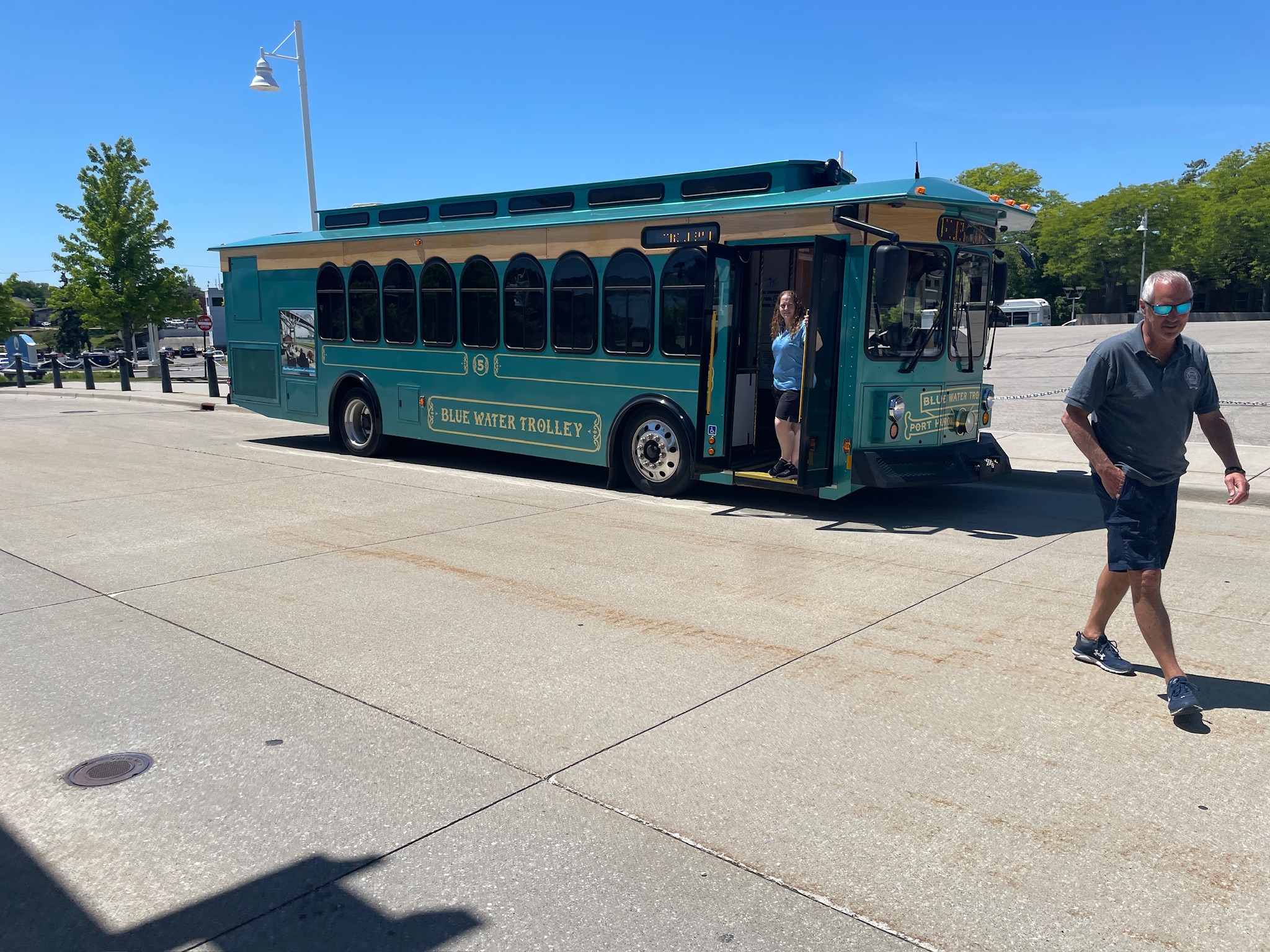
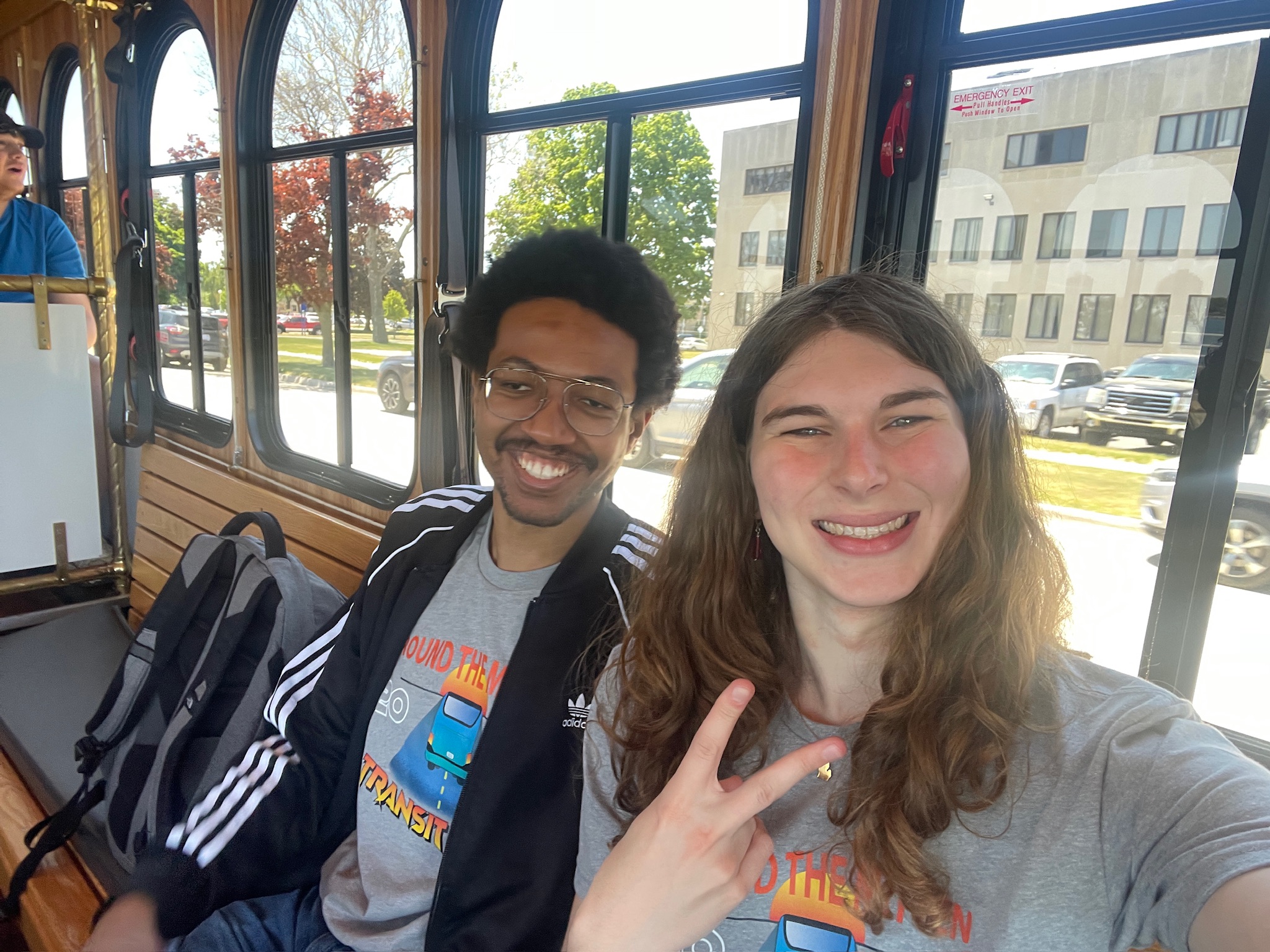
In Port Huron, we joined up with Tyler Moldovan, a Blue Water Area Transit bus driver, union rep, and head of Port Huron Urbanists. We attended a relevant and interesting lecture by Jim Soto on the history of urban renewal in Port Huron. Afterwards, we took the Blue Water Trolley: For only 10 cents, this unique trolley bus takes you around Port Huron with narration of the city’s history!
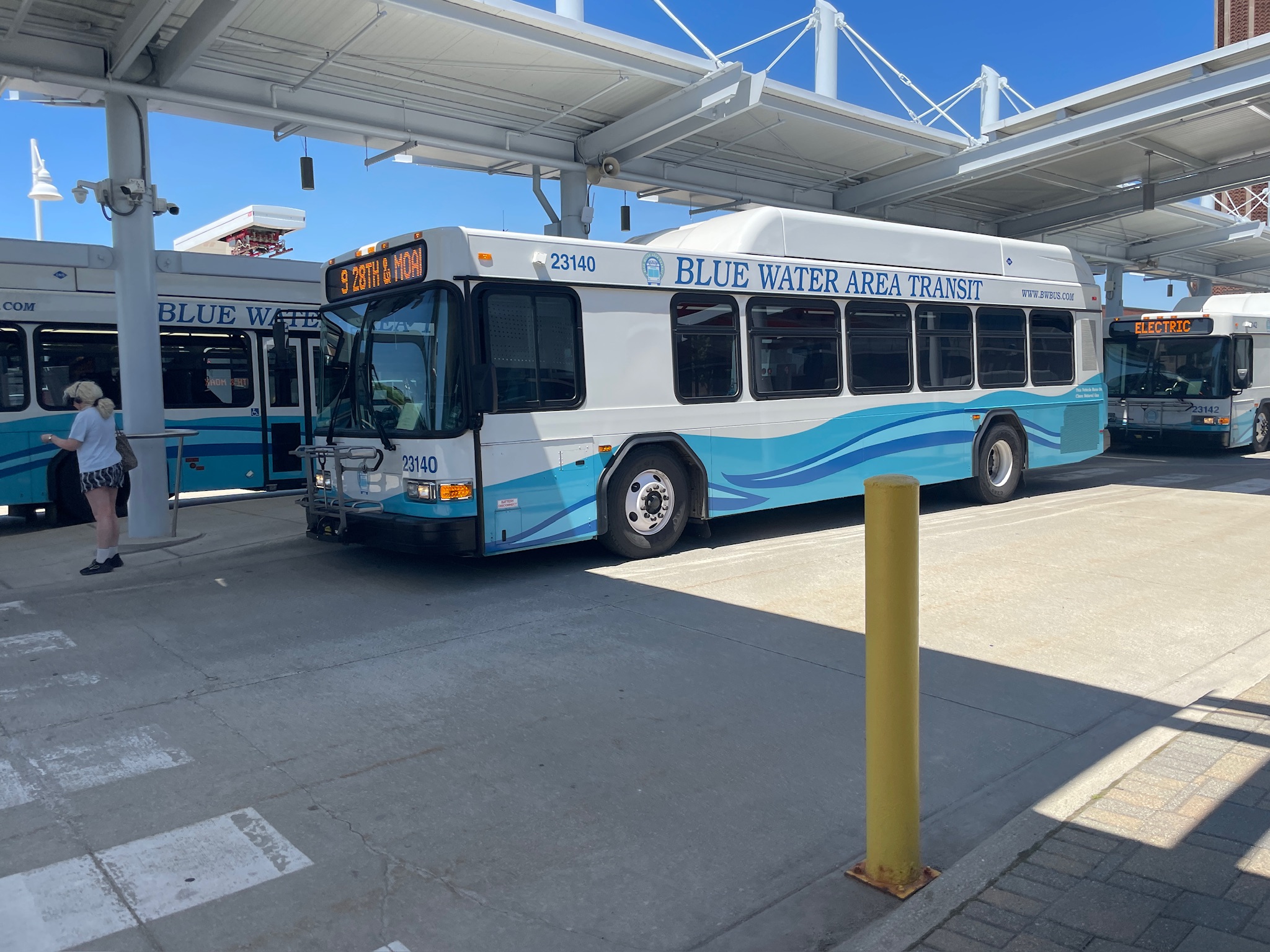
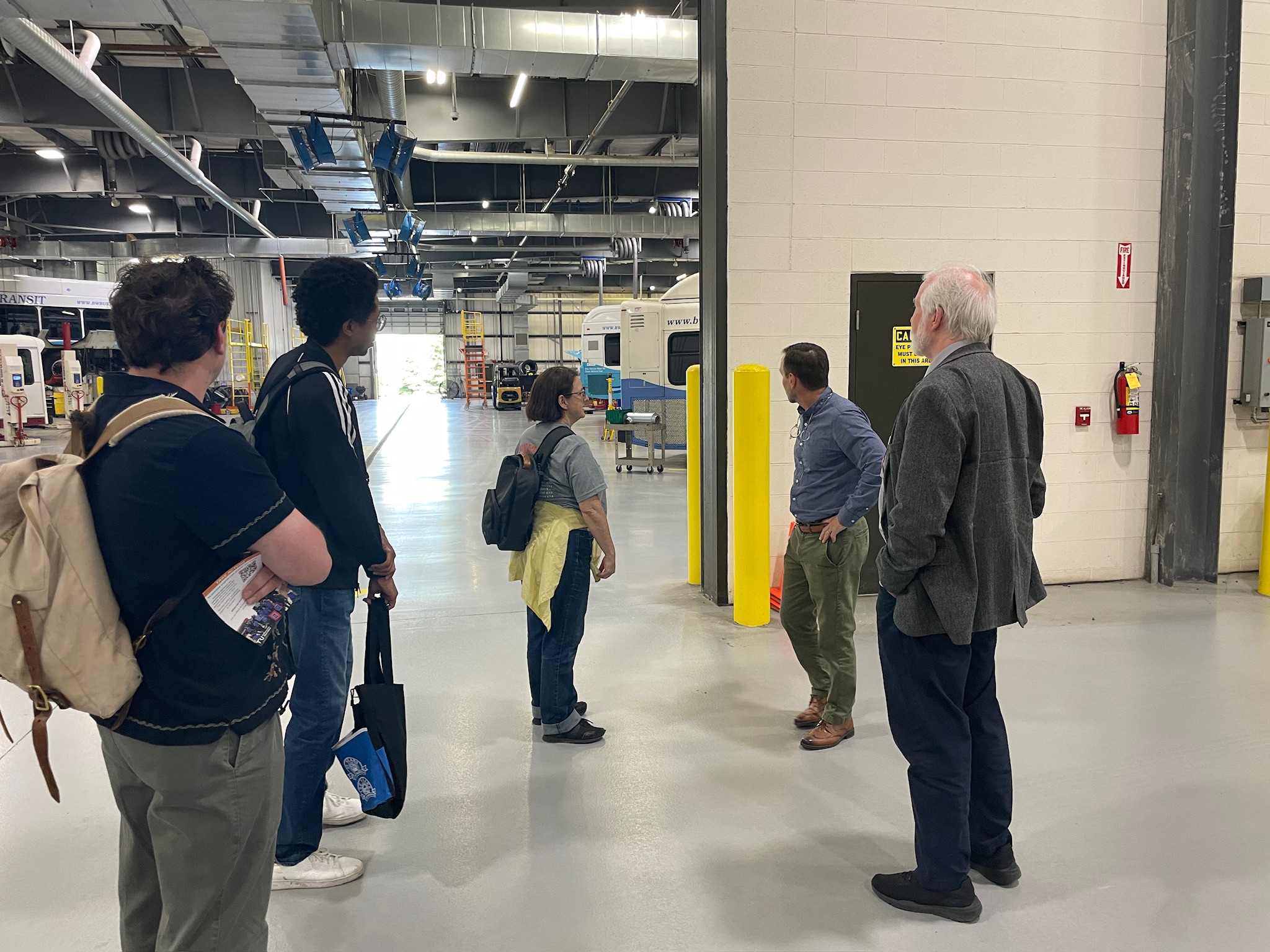
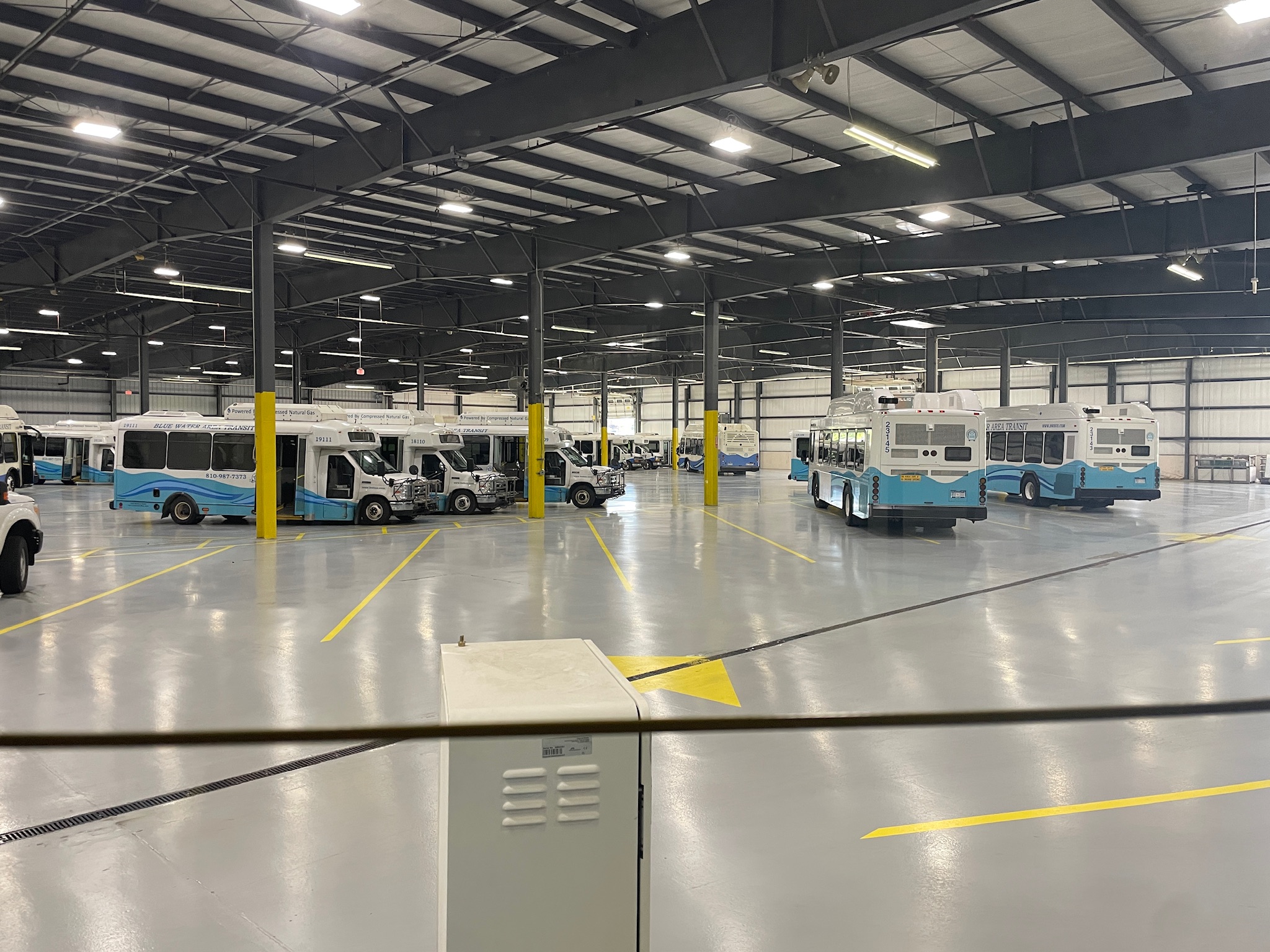
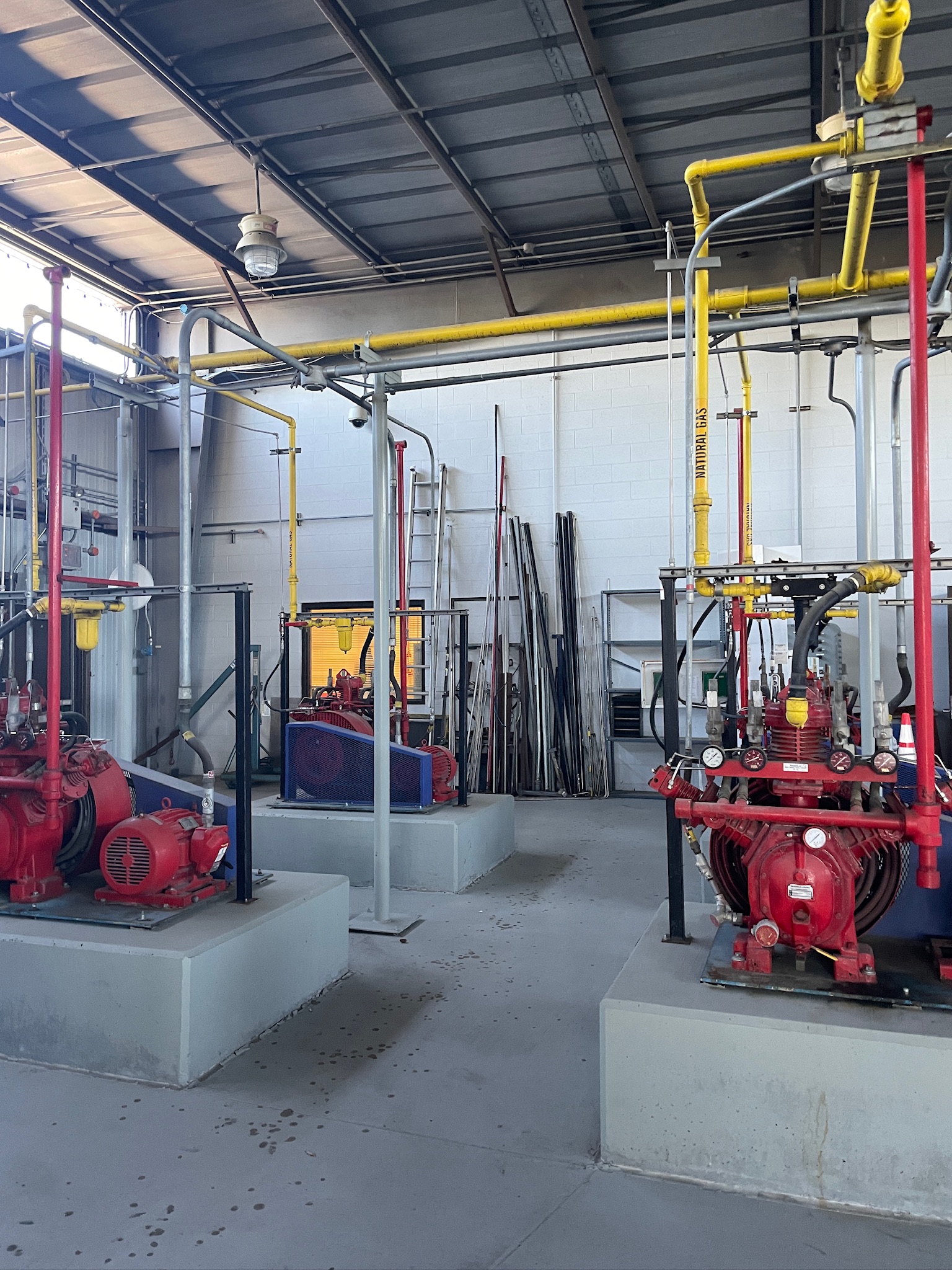
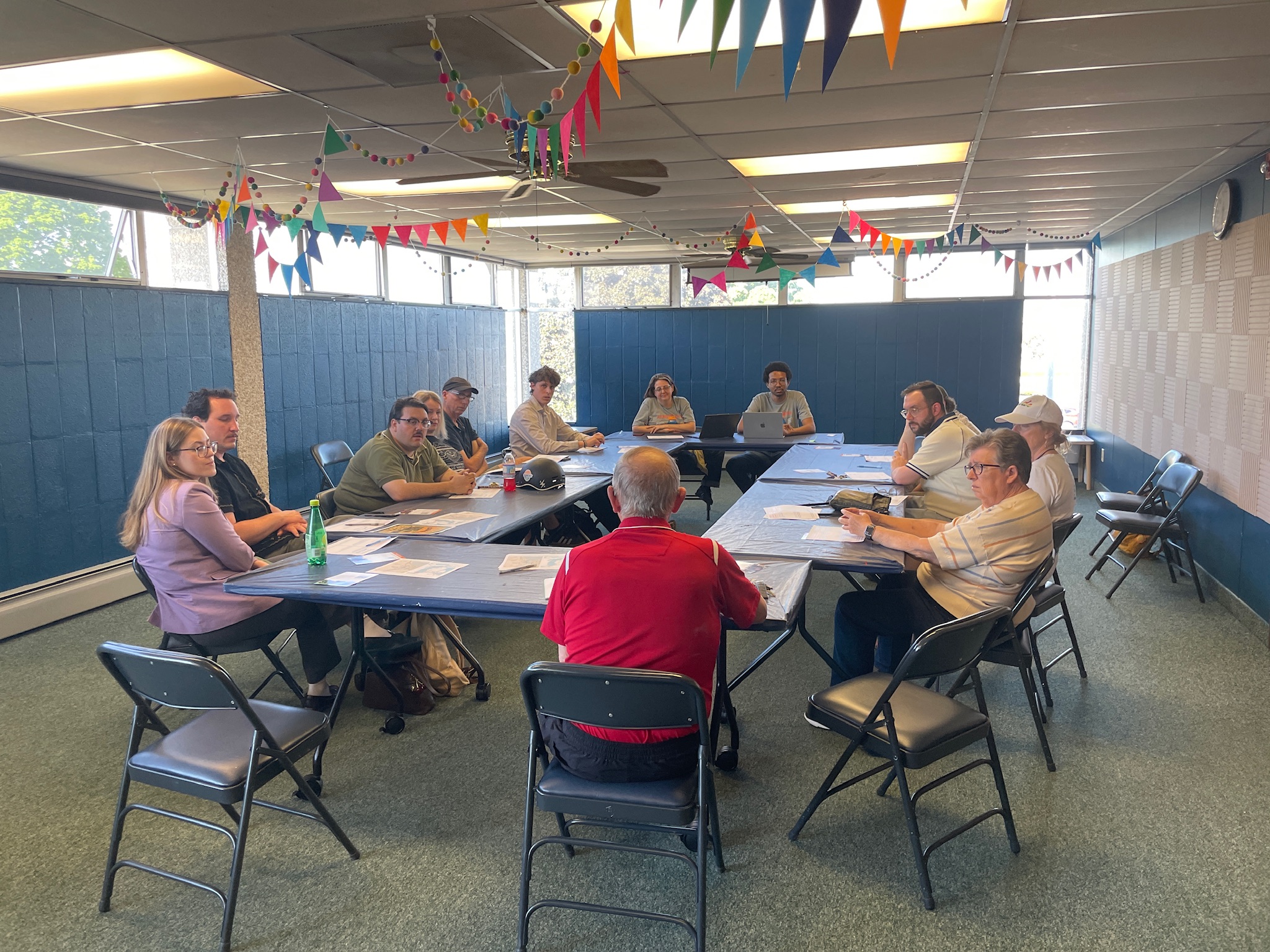
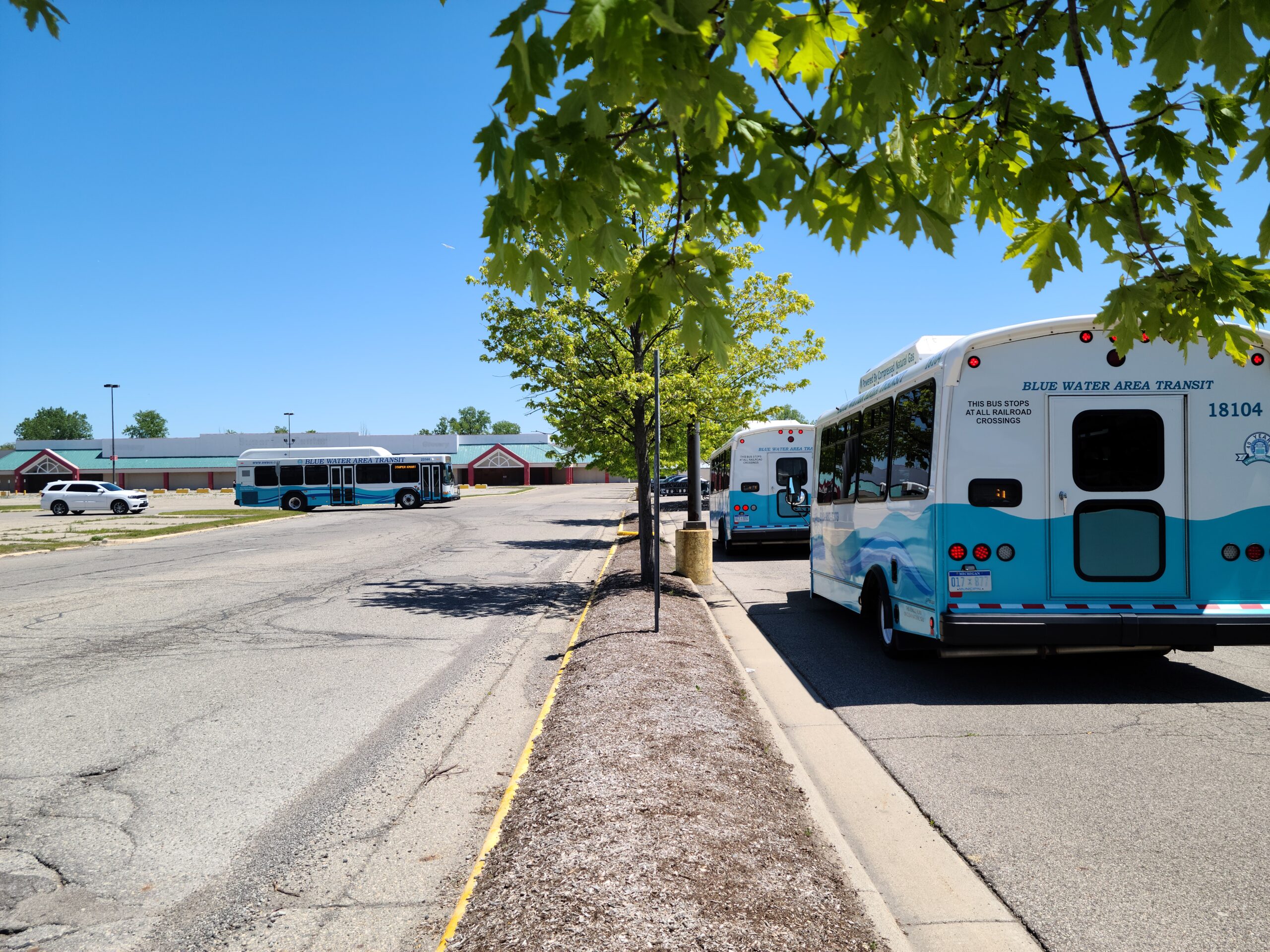
Next up was a meeting and tour of the Blue Water Transit Authority facilities. We learned that Port Huron still charges just 80 cent bus fares and has had a diesel-free fleet since the 90s! All of their buses run on Compressed Natural Gas which they produce at their bus garage. This has insulated BWATA from rising fuel prices and even lets them sell some CNG to make some money. Finally, we ended a packed first day with our first Community Conversation at the St. Clair County Library. This conversation was dynamic and insightful, with 15 thoughtful community members sharing their experiences and perspectives about getting around Port Huron and the state!
June 4 – Port Huron to Flint and Saginaw
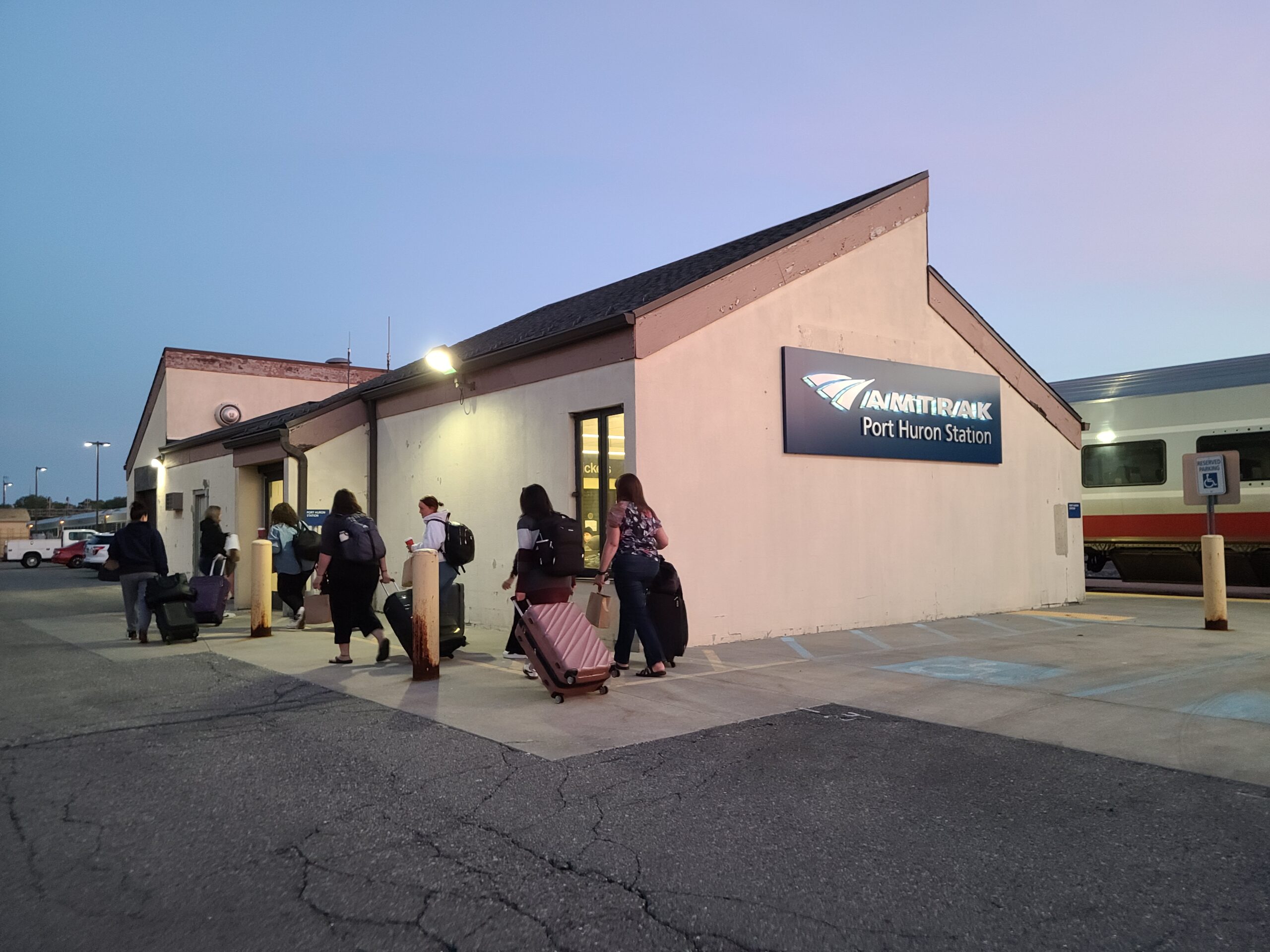
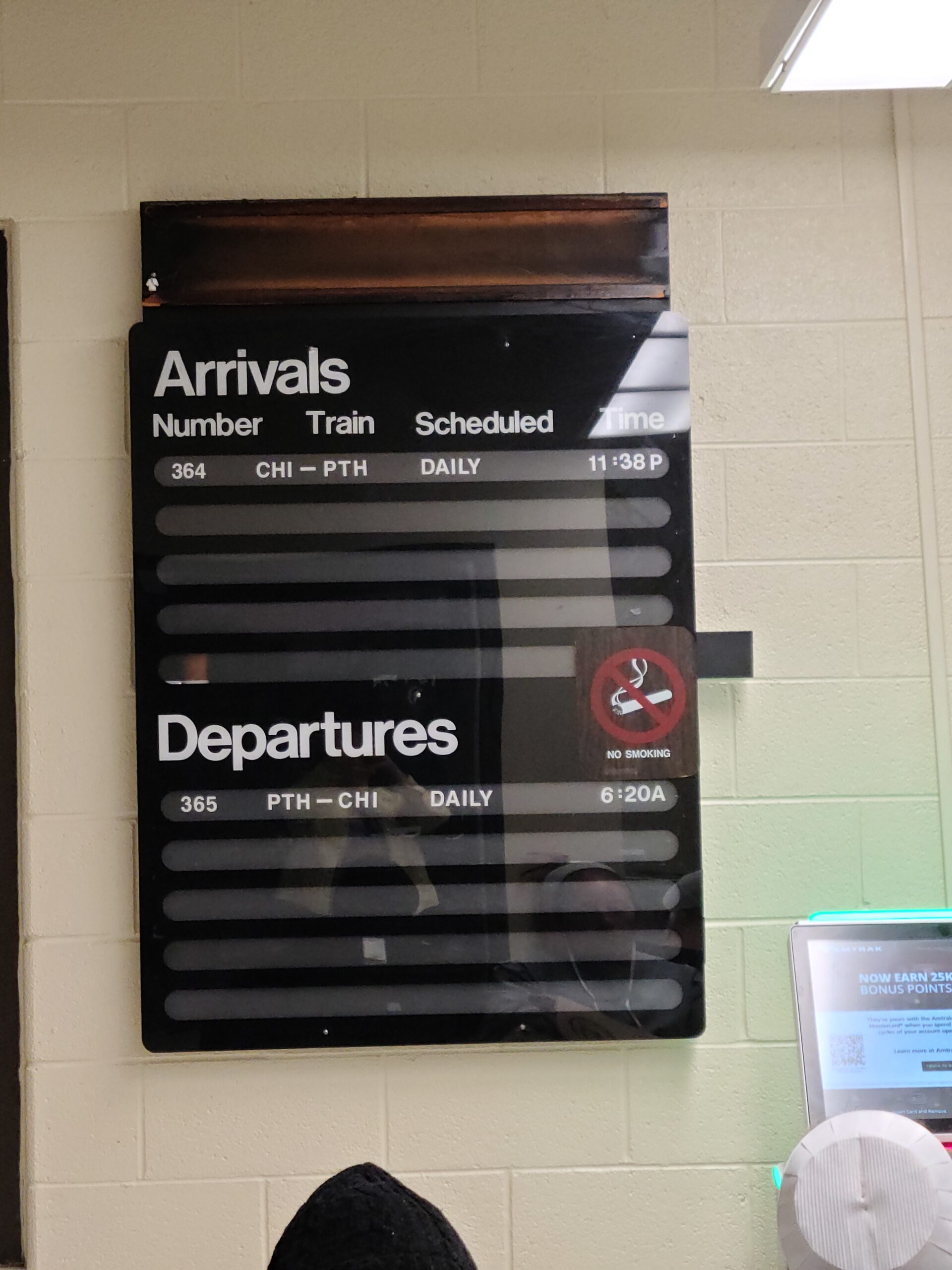
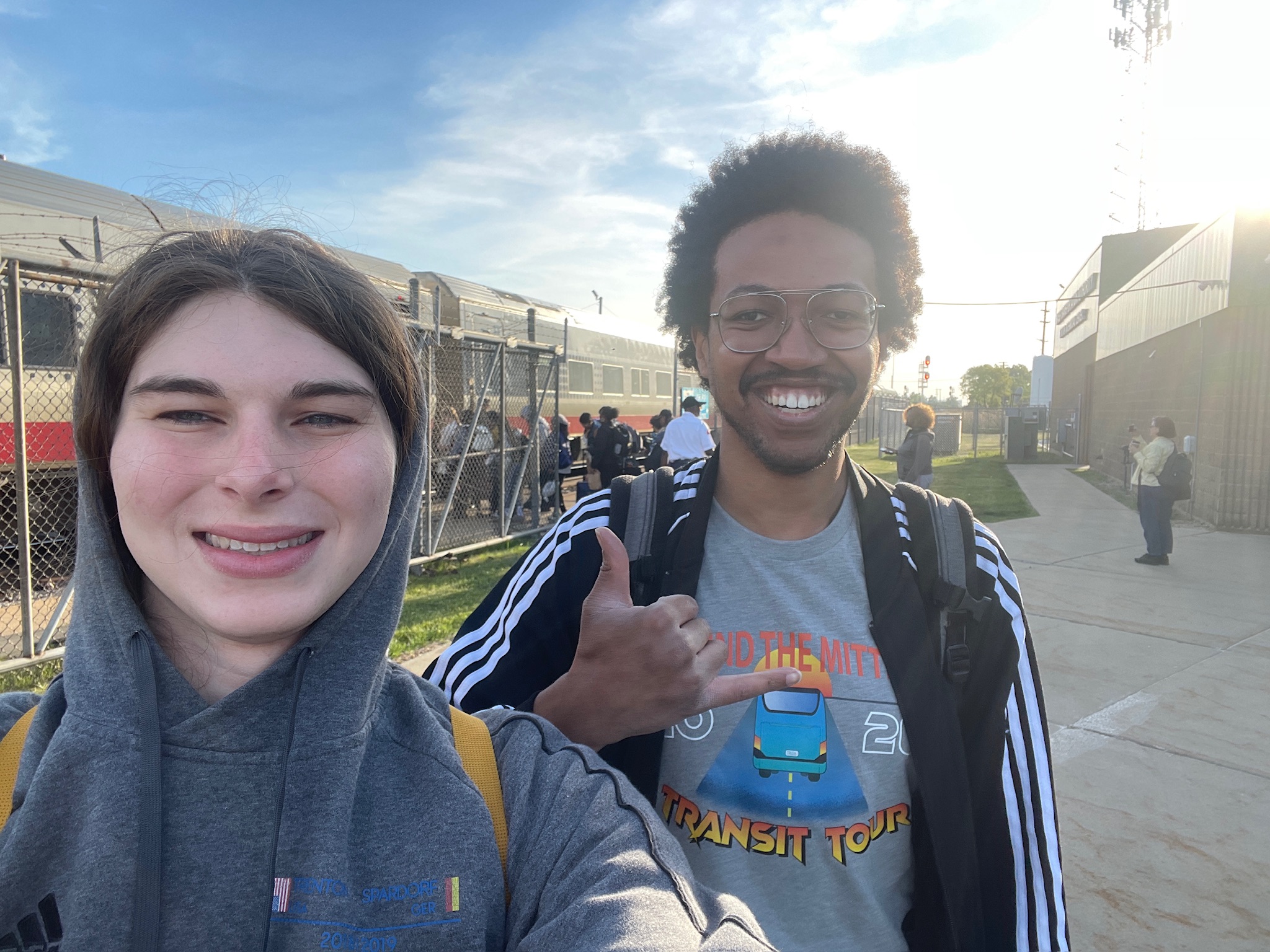
Day two started bright and early, as we had to get up at 4:30am for our 6:20am train from Port Huron to Flint – which is not only the singular train trip available each day, it’s the only transit option west. The day before, we had requested a dial-a-ride pick up – the only transit option at that hour. After (barely) making our 5:05am ride, we made it to the Port Huron train station. This small station was packed even at that early hour with seniors heading out to visit family in Milwaukee, a big group heading on a girls weekend in Chicago, and even Mennonite families waiting for the train – a great reminder that providing a true range of multimodal transportation options helps so many people get around!
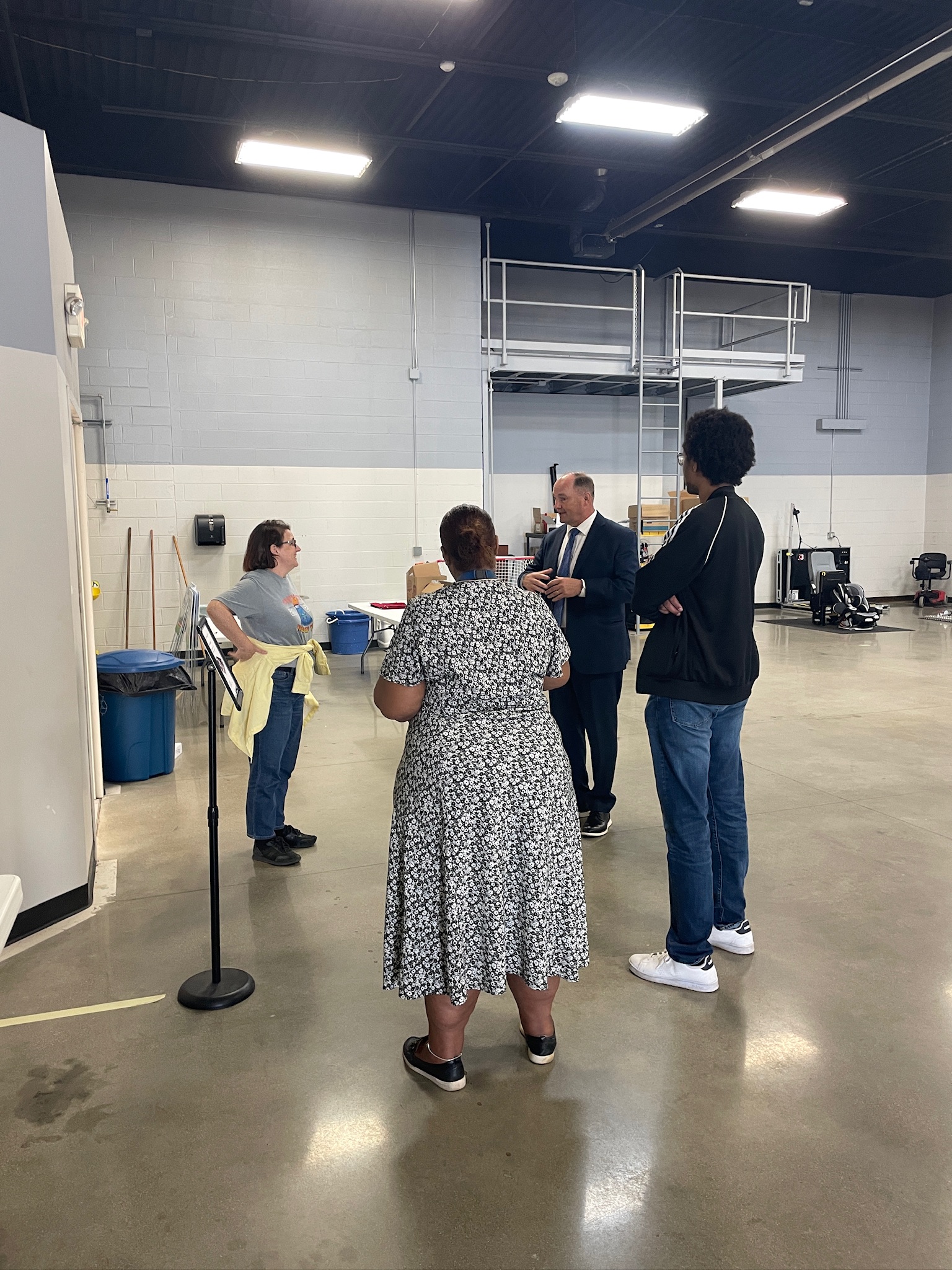
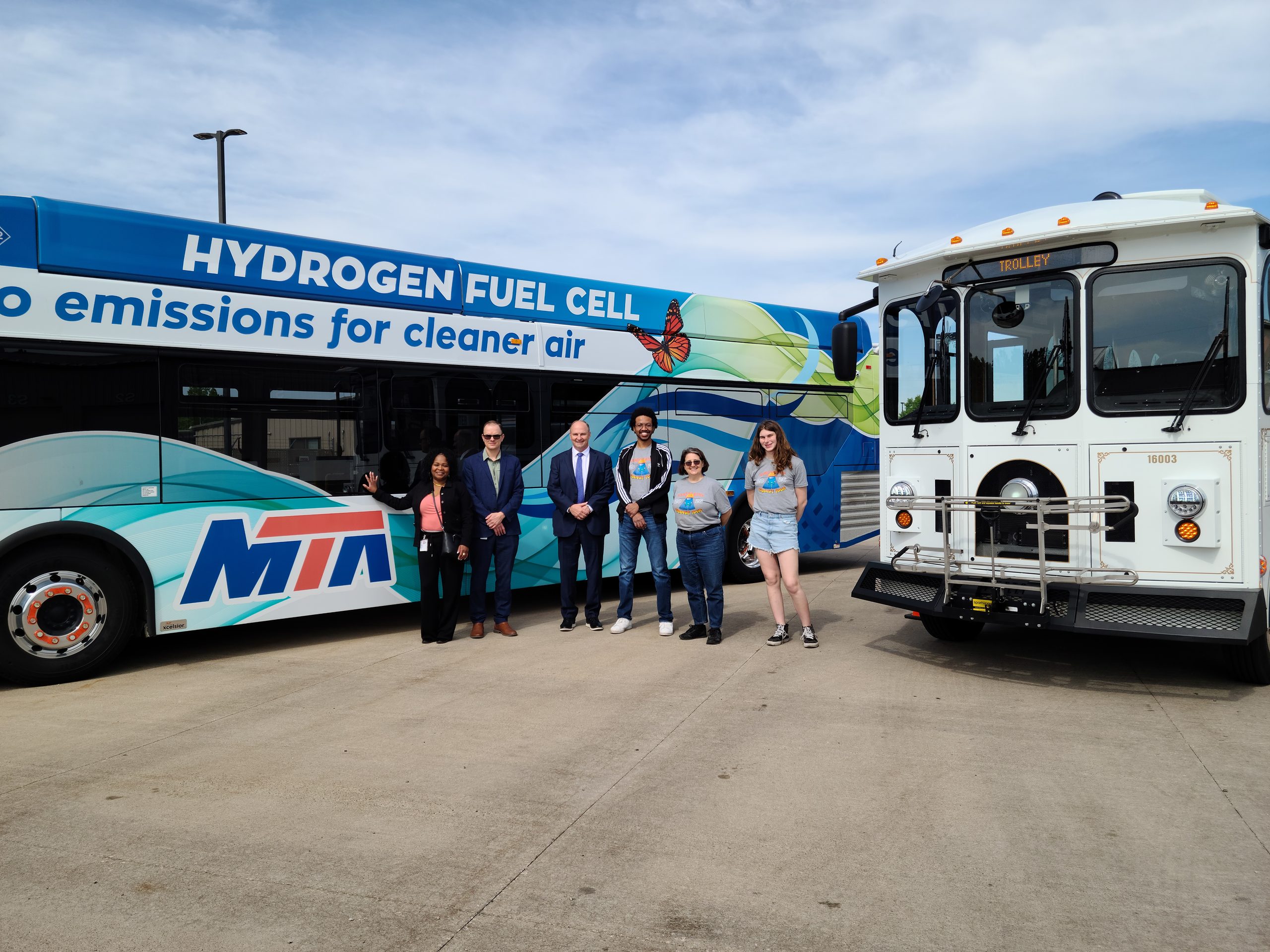
Flint really rolled out the red carpet for us! We met with the most department leaders at the MTA HQ and viewed several of their facilities. While just starting our tour, MTA is certainly among the forefront of transit innovation in our state! The MTA has no outsourced employees, even for their forth-coming Flex-type service, meaning everyone is a unionized MTA employee. They have reloadable tap-to-pay fare cards much like in Chicago; regional routes to Great Lakes Crossing, Brighton, and Howell, all funded by employers, but open to the public; all of their normal buses are diesel-free, with a mix of Hydrogen, CNG, and electric; and a beautiful downtown transfer hub with stained glass art spotlighting labor history! They’ve got 30+ partnerships with health care, educational and other institutions and are constantly seeking new ways to do things better. We even got on two TV news stations in Flint for our visit!
At lunch, we met with the head of Strong Town Flint‘s transit committee, Andrew Watchorn. We discussed ideas like a D2A2-like service between Flint and Detroit and adding Genese County to the RTA. While not brought up as much in Port Huron, much like Flint and Ann Arbor, there was a desire for further connections between Port Huron and Detroit as well. Maybe St. Clair County should be in the RTA, or at least should have a D2A2 style bus with stops in Mount Clemens and Detroit!
After Flint, some of us continued onto Saginaw via Indian Trails. If you’re taking an MTA bus to the Amtrak/Indian Trails station, you need to request the route stops at the Amtrak station (just by asking the driver). And the bus we took was very nice, and very fast! While this connection is only once a day, it only took 50 minutes to get to Saginaw, and the bus was very new.
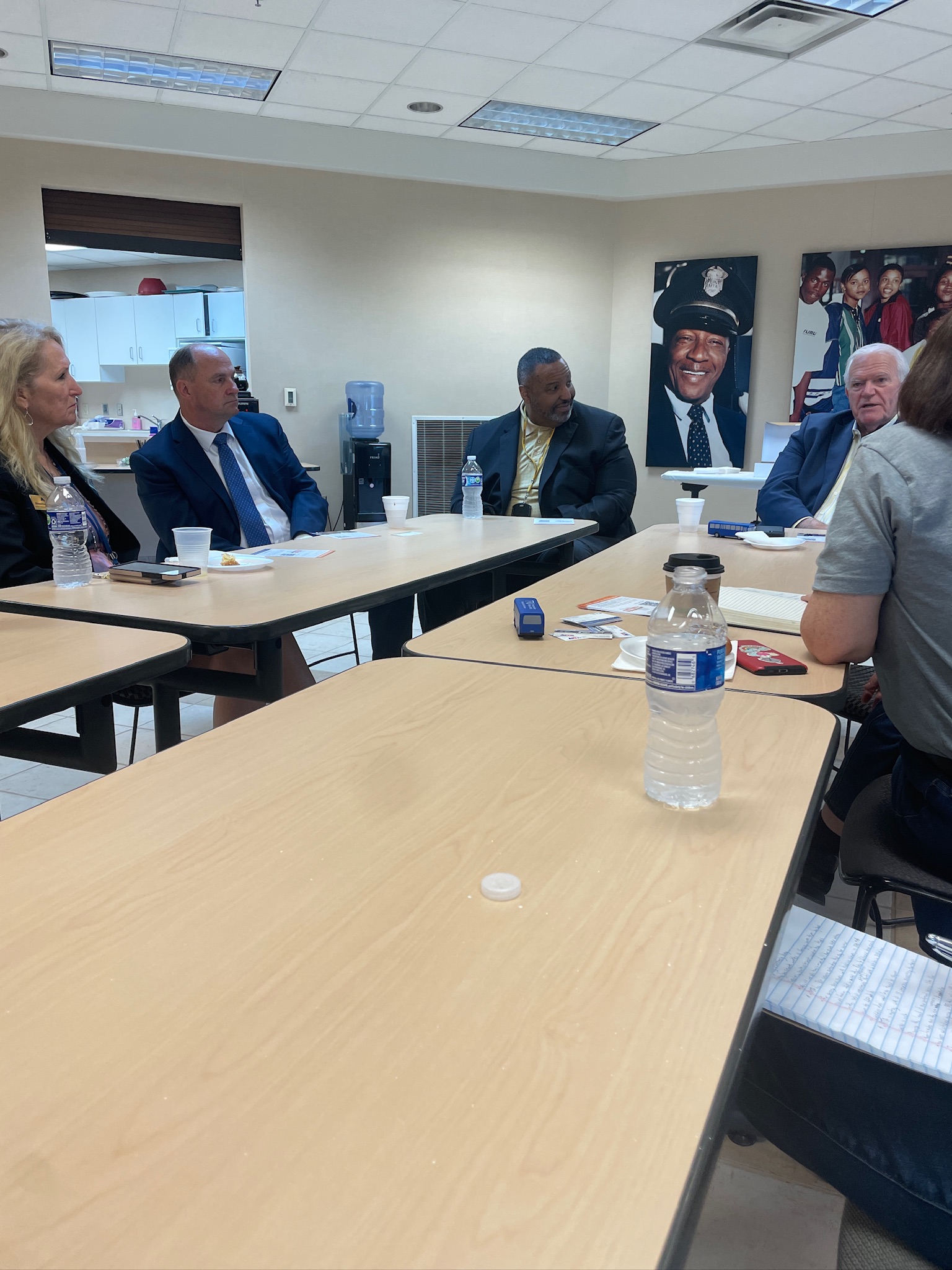
In Saginaw, we met the head of STARS transit agency and went to a beautiful historic library for our next Community Conversation. We met with STARS, Jamie of Disability Network of Mid-Michigan, a rider, and board members of STARS. In this meeting, we learned a lot about the challenges STARS has been facing. Like Detroit, Saginaw has had a 50% drop in population over the past 50 years, and Saginaw has struggled to maintain transit service amidst a shrinking population. STARS is also not a countywide authority, and only receives funding from Saginaw City (whereas agencies like SMART or BWATA, while not being completely countywide, receive funding from numerous cities in their regions). However, STARS is working on modernizing their system to allow for debit card payments, working on a regional connection with Flint, and to do a transit master plan. STARS also has some bright spots, including a regional connection to Bay City via SVSU, and an innovative icon symbol for each route found on their buses and maps.
After our meeting, we visited the old train station in Saginaw on Potter St. STARS, the City, and local advocates are working on preserving the station and redeveloping the Potter St neighborhood into a mixed-use district, which will host expanded STARS facilities, a daycare, apartments, and more, all right next to a new transfer hub for STARS and a short walk to downtown. Saginaw is even hoping that with MDOT’s Corridor ID study for the Wolverine, the train could be extended north to Flint and Saginaw, which would be a huge connection in our state!
June 5 – Saginaw to Bay City and Alpena
We started day 3 with a call from KCQ radio in Saginaw and were interviewed for the Morning Show with the Bear! Search up “KCQ Special Guest” and find our interview on the 98.1 FM KCQ website. We then took a STARS bus out to SVSU and transferred to a Bay Metro bus to Bay City. After resting up, we had a stakeholder roundtable hosted with Disability Network of Mid-Michigan.
Afterwards, it was onto the bus towards Alpena, a three hour Indian Trails ride. At this point in the trip, Bay City to Alpena marks the longest bus trip we’ve taken, and after quite a long day of activities and general chaos, at that. In accordance with the length of that trip, we had a 15-minute food stop at Burger King, which provided a good amount of fuel for finishing up the day.
When our Indian Trails bus arrived in Alpena, two other passengers got off and were picked up by folks waiting for them in cars. We had pre-arranged a Dial-A-Ride from Alpena’s local transit agency, the Thunder Bay Transportation Authority (TBTA), and the little red bus was waiting for us to board. Uniquely, our Dial-A-Ride was actually outside of normal operating hours for TBTA; but with enough advance notice, they will allow booking of a ride if they can find a driver willing to volunteer. A ride was extremely convenient for getting to our hotel downtown, as in Alpena, the Indian Trails stop is a roughly 2.5 mile walk from downtown.
Alpena’s Indian Trails stop itself leaves a bit to be desired. There is no shelter, bench, sign, pavement marking, or anything else of the sort that would indicate one was at a bus stop or waiting for a bus rather than loitering, and a waiting bus rider’s options are essentially to stand or sit on the ground. Due to once-daily scheduling, the bus arrives in the morning headed south at 9:45am, and arrives in the evening headed north at 8:45pm.
June 6 – Alpena to Mackinaw
The next day, we met with Brandi Anderson, the Mobility Manager at TBTA. She provided a wealth of knowledge on rural transportation; opportunities with NEMT and social service transportation, gaps in services for veterans, ideas for engaging with folks nontraditionally on the topic of transit; our conversation was a blast. At the end, we were able to take a look at TBTA’s facilities and speak with dispatch about what their role is like, challenges they face with lining up service when things are too busy, and her overall role.
After a long day in town, the TBTA dial-a-ride showed up outside of our hotel. We grabbed our bags, got in, and made our way to the Indian Trails “bus stop.” There, we sat with my bags for about 30 minutes, and very politely turned down a stranger who pulled up and asked if we needed a ride. Just about a minute after promised, the Indian Trails bus showed up, and we boarded.
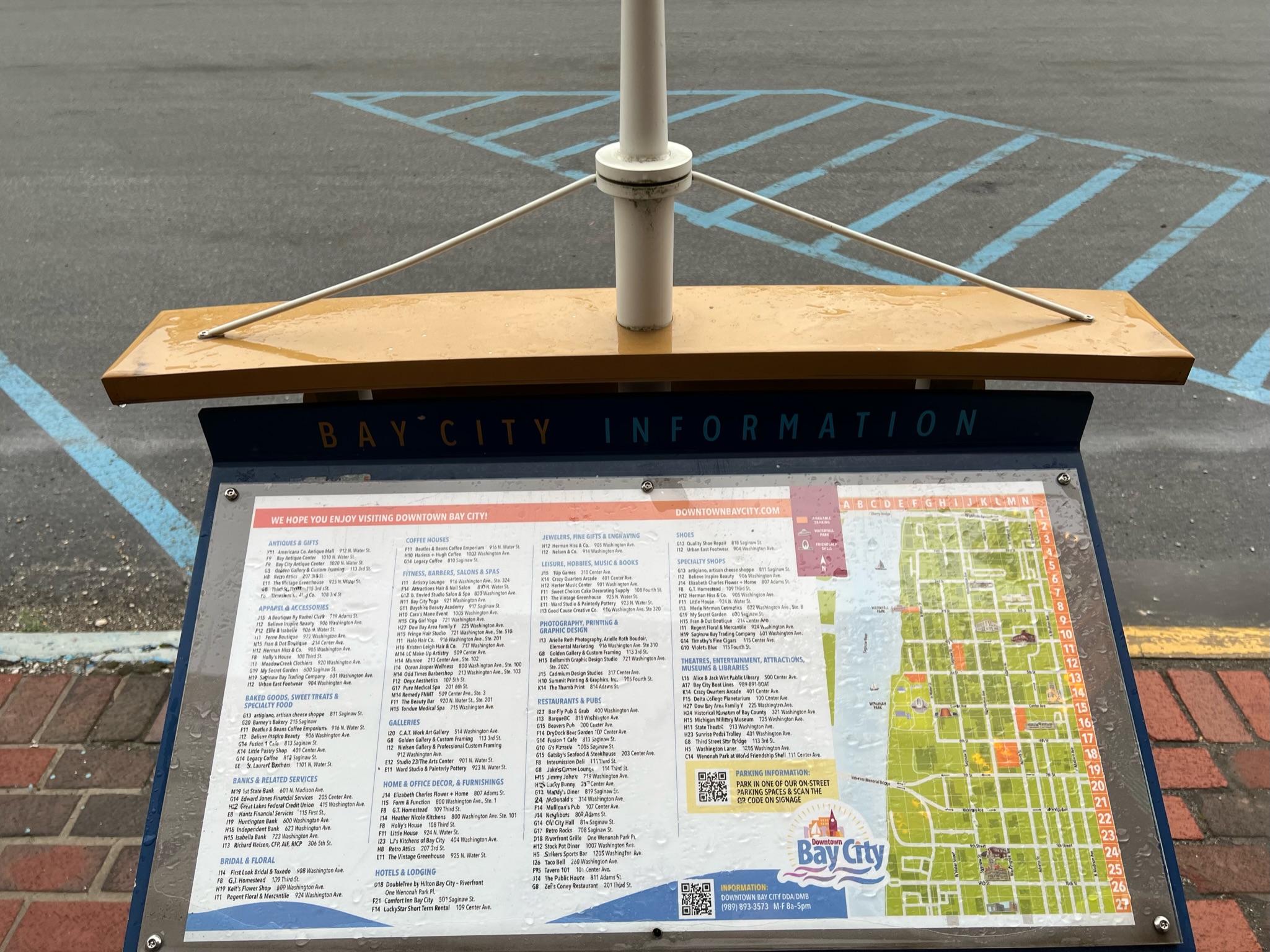
In Mackinaw City, our Indian Trails bus dropped us off right at the Municipal Building, which sits between the town’s main shopping area and its ferry docks. Here, there is a sign denoting the stop, as well as a bench; within the vicinity are a local directory, trash can, flower bed, and streetlight. On a few occasions when we saw the bus arrive, folks got off with bikes and used the local infrastructure to travel to their final destination. Within about 100 yards, one will also find a public restroom (one of three in the city) and vending machines.
June 7 – Mackinaw City
Given Mackinaw City’s size, the bus stop is less than a mile away from the vast majority of the town’s hotels, save for those on the furthest southern reaches of the shoreline. This makes walking, rolling, or biking to your destination quite enjoyable, and once you check-in, there’s hardly a reason to get back into your car unless you plan on leaving city limits, given how pleasant the streetscape designs are.
The biggest flaw in Mackinaw City’s intercity bus connection is common across Michigan’s bus network; timing of service. Mackinaw City is a junction point in our network, and is served by three bus lines that connect Mackinaw with communities in the west, east, and central parts of the state, but timing means that buses on each of these routes depart between 7:00-8:00am to head south in the morning, and between 9:55-10:45pm to head north in the evening. This means passengers coming from the south of the state arrive in the night, once the vast majority of shops and restaurants are closed. A city directory listing the various businesses, bathrooms, attractions etc. is a few yards away from the bus stop and can help orient passengers after their trip.
While our sole mode for local travel in Mackinaw City was by foot, we saw a Straits Regional Ride vehicle, as well as several ferry transport shuttles roving around town picking folks up from various resorts and parking lots. Perhaps tourists and locals in the Mackinaw area would appreciate a tourist trolley in the style of what Port Huron offers. There are various tourist attractions like the Mackinac Point Lighthouse and museum, or the historical reenactment sights Fort Mackinac and Colonial Michilimackinac. However, they are not connected via local transit and may not be within walking distance for those with various levels of mobility.
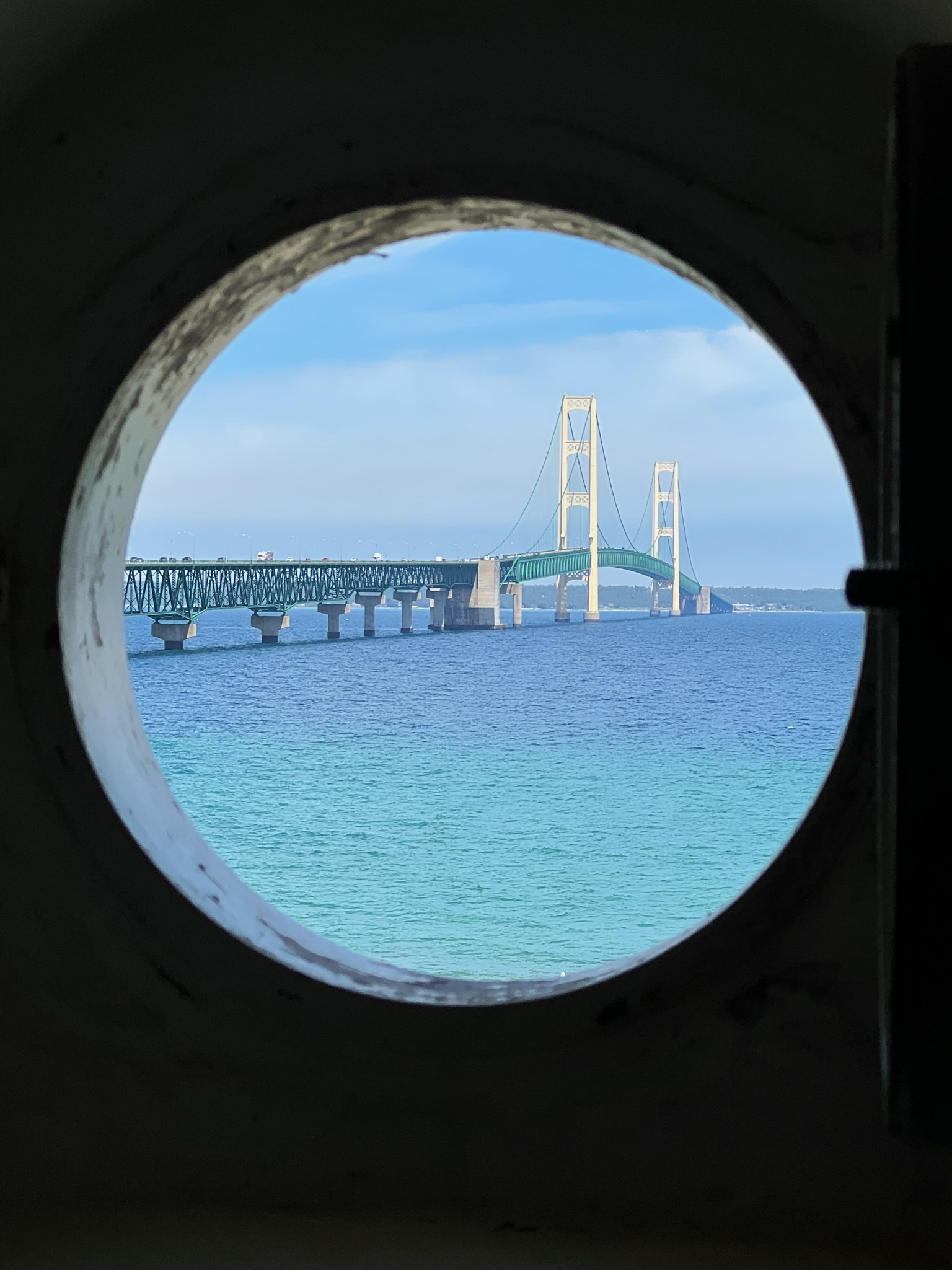
June 8 – Mackinac Island
Mackinac Island was a captivating transportation experience. Ferry tickets were quite expensive; with the booking fee, they were $41 per person for our round trip. Passengers have the option to sit on the upper deck and enjoy the high winds and light spray from the great lake, or to sit in the lower deck and be spared from the elements. Bikes, both regular and electric, are allowed on the boats for an additional fee; we opted to wait to rent bikes until we were on the island.
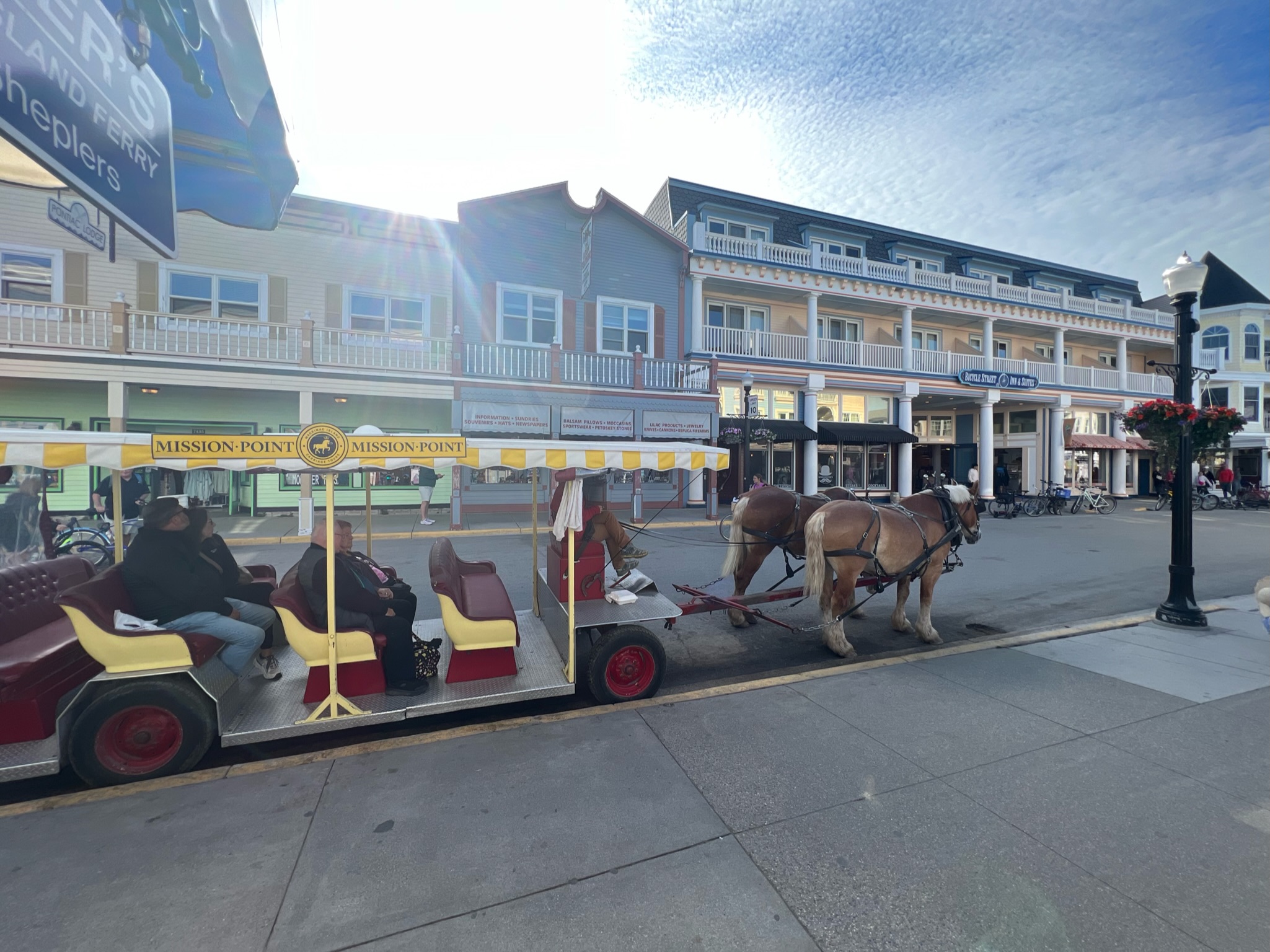
Disembarking into the sole community in our state where cars are completely forbidden was quite the experience for the Transit Tour! Seeing dense, Victorian-style development as soon as you walk out of the docks, the smattering of bike rental shops and hotels, plus the crowds milling about the streets and sidewalks, the most concerning vehicle on their mind being one pulled by a horse.
It was quite special to be able to rent a bike and travel along the only stretch of MDOT road that is completely dedicated to usage by nonmotorized vehicles, M-185. Fascinatingly, Mackinaw Island is about a square mile larger than Mackinaw City, but it feels even breezier to travel through without a car given how the infrastructure is developed.
Transportation to Mackinac Island is limited to the services operated by the two ferry companies, Shepler’s and Arnold’s, which are both owned by the same company as of 2024. This means that the company has a hefty amount of control over transportation to Mackinaw City, almost reminiscent of the private streetcar, interurban, and rail networks of the early 20th century, particularly when it comes to power over ferry pricing and schedules. Recently, however, Michigan’s legislature passed a law that would allow the island to amend its charter to regulate the ferries as more of a public utility; how things will pan out here remains to be seen.
Our adventure at its end, we boarded the last ferry back from the island to Mackinaw City. A number of folks waited with their bikes, and when we disembarked, most of them rode off into town, while a few more folks walked. The rest of the moderately-sized crowd either made their way into the lot or onto one of the shuttles to be taken to their hotel or satellite parking lot.
June 9 – Marquette
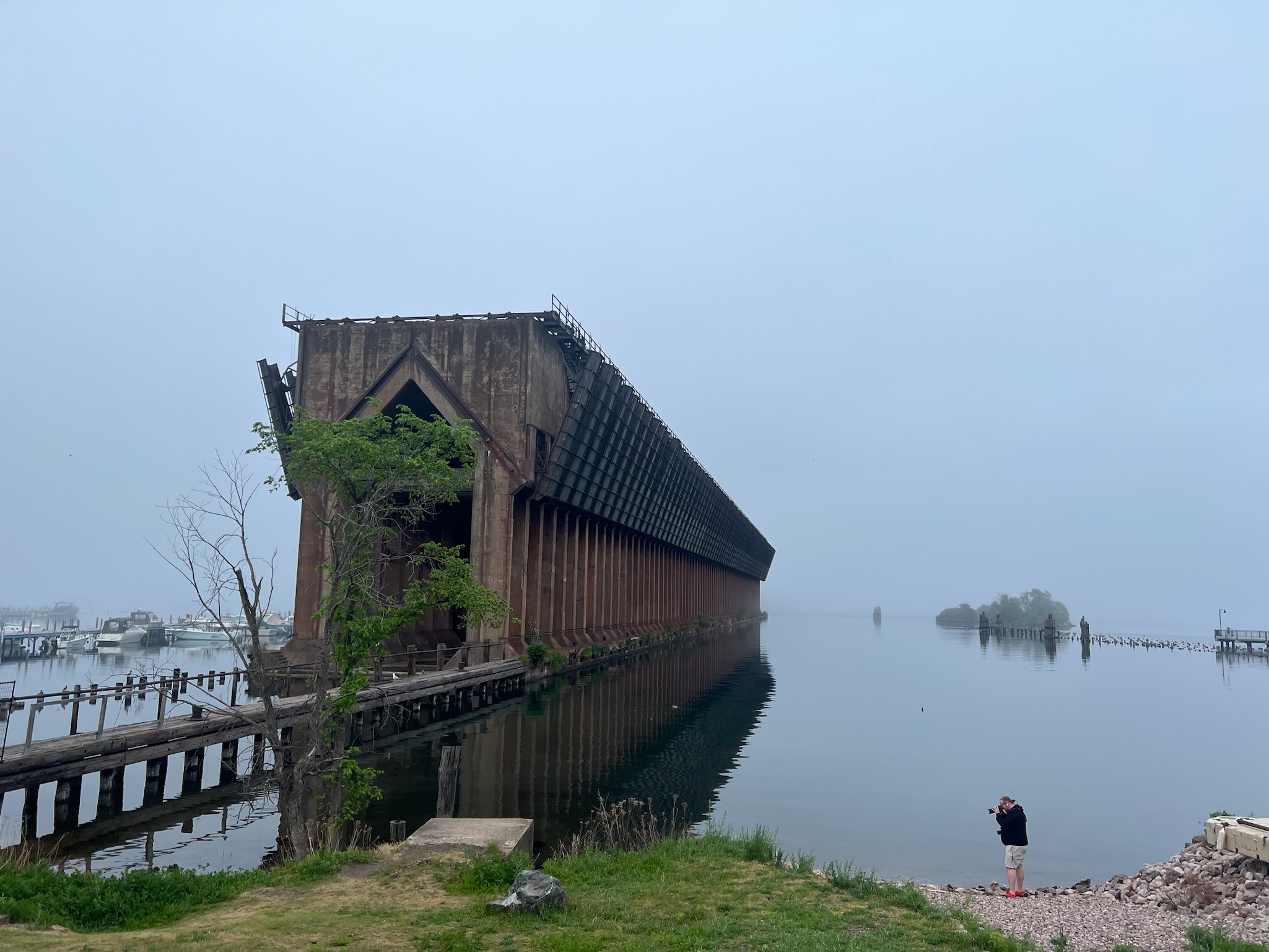
Getting to Marquette from Mackinaw City required a bit of a daunting trip. Our bus was supposed to depart at 9:55pm to get us to St. Ignace for our next ride, a 11:20pm departure toward Escanaba. However, we missed this ride, and had to catch the 10:45pm, which is not typically an option, but our very friendly driver was willing to allow after we explained our situation.
In St. Ignace, the bus stop is at the Transportation Center, and is quite nice, though unfortunately it was closed for remodeling when we stopped. Conveniently for us, we were able to stay on the same bus at this point in the trip. The same wouldn’t be the case in roughly four hours when we arrived in Escanaba and had to switch buses amidst some light rain. This transfer point is at the Delta Area Transportation Authority’s headquarters, and a portion of their building serves as the intercity bus stop.
After leaving Escanaba, we finally got to Marquette, quite a bit early at about 5:00am. Marquette’s stop is on the outskirts of town in a quite unwalkable area dominated by highways and two-lane roads without sidewalks. There are, however, a nice portico, benches, a trash can, bike racks, and a small indoor area that was closed when we got there. Unfortunately, transit service isn’t available that early in Marquette, and even more so, we were caught in the rain. Fortunately, we were able to get a ride from Checker Transport, the local cab company, which took us to a nearby Holiday Inn where we recovered for a bit.
To get into town, we walked from our Holiday Inn to Kohl’s, the closest MarqTran bus waypoint to our hotel. This walk took about 15 minutes, on a stretch of sidewalk that felt more like a slightly elevated shoulder. With a seemingly shorter than average curb, a high incline and traffic so close, the walk from the hotel to the bus stop wasn’t the most comfortable. We were decently lucky to figure out where the bus picked up, as there was a small crowd waiting as we walked over. When observing smaller local transit a trend begins to emerge. This can contribute greatly to problems with those unfamiliar with the transit stop system. It would be nice if MarqTran could improve wayfinding to provide more detail on where the bus was going to be at a particular time. It seems a natural solution to a smaller population with transit needs in rural or sprawling metropolitan areas, is to implement a flex-route approach where drop off/pick up locations are flexible and work in concert with a network of designated, accessible bus stop locations.
Our bus took us to the MarqTran Passenger Transfer Station in downtown, a quaint but nice space befitting the town. It sits directly adjacent to the Iron Ore Heritage Trail, which connects to a sprawling nonmotorized network that’ll take a rider as far as the town of Republic while also connecting with local hubs like the high school, medical center, and Northern Michigan University.
Our community conversation in Marquette focused on funding and thinking through ideas for gradual system improvement. A wide band of local activists and interested folks showed up, as did MarqTran’s director. Conversations will need to continue but folks praised efforts to maintain service into the present day as well as the free summer rides for youth MarqTran offers, and brought up ideas such as signage for stops, improved mapping and tracking for vehicles, a downtown circulator/trolley service similar to what we saw in Port Huron, alongside a lot of calls for increased frequency and expanded scheduling. Folks also brought up the state of their intercity connections; the reality of arriving in town before sunset if you’re coming from anywhere southeast of Marquette, and departing at 12:45am to go to those same places; there was a deep desire for more service, and also belief that the increased service would increase ridership, as many folks in the room have used the existing service. E-bikes were also mentioned as a major source of micro mobility, especially for young folks; anecdotally, we saw a number of people e-biking on US-41, the area’s major highway. Towards the end of the conversation, folks were actively figuring out how to collaborate with each other as well as other organizations within Marquette to approach MarqTran system reform more collaboratively.
Unfortunately, MarqTran service ends at 6pm on weekdays. Rather than phoning Checker Transport again, we asked a friend, John Dulmes of the MPTA, if we could carpool/get a ride back to our hotel; fortunately, they gladly obliged. We recovered a bit more, and did a bit of reporting before another friend, Ruby from We the People—who actually helped us to organize our wonderful stop in Marquette—picked us up from our hotel to take us to the bus stop around 12am.
June 10 – Marquette to Traverse City
After riding to Marquette, the ride to Traverse City was… still a lot. This time, the transfer in Escanaba was only about 90 minutes into our ride, though we would also end up needing to transfer in St. Ignace.
Since we had to switch buses, we ended up waiting under the awning of the St. Ignace Transportation Center as rain misted onto us. While we were waiting, one of our team members had to use the bathroom, and walked about a quarter mile to the nearest grocery store to do so. Unfortunately, in this time, our bus arrived; fortunately, our driver was friendly enough to wait for them to get back before departing.
Our bus arrived in Traverse City a tad bit behind schedule, only by about 25 minutes or so. In Traverse City, the bus drops you off right at BATA’s Transit Center. Schedules are timed so that a few buses are leaving at the same time the Indian Trails arrives, including the route we needed, the BayLine.
The BayLine is perhaps one of the most unique transit experiences we had while traveling the state. It is a completely free, fixed-route bus line that runs every 15 minutes and connects the vast majority of destinations in Traverse City’s downtown to the hospital, Meijer, senior center, and major hotel row on US-31. We would love to see this line marketed more heavily; while a good number of local folks were on every time we rode, we didn’t see that many other travelers or tourists hopping on at the stops near the hotels.
After taking the BayLine to our hotel, we relaxed a bit before taking the BayLine to meet with Lacey Edgecomb, the Director of the Traverse City Senior Center Network. Lacey is a major transit champion, and is working on initiatives that aim to familiarize more seniors with transit. She has also taken to riding BATA to understand the network better and become a better advocate for service. Car-centricity is a tough mindset for many members to break, but, the center is working with BATA on events and programs that could change this, including more reward-type programs. When our team took the BayLine to the senior center, we noticed that the shelter and infrastructure on the center’s side of the road was very nice, but that on the opposite side of the street was extremely unpleasant, and one is left wondering if that environment hinders transit usage.
When we were about to leave the senior center, Lacey introduced us to Nancy, who is 92 and who remembers growing up in Detroit and biking to Belle Isle. Nancy is an enormous fan of BATA; she uses the Link service to get around and preserve her independence, and was actually waiting for one that she was watching on her phone while she talked with us. She also wants more intercity connections, particularly to downstate Michigan, and would love to be able to take a train to Detroit.
We wrapped things up in Traverse City with a conversation with some folks from the Grand Traverse Safe Streets Alliance. There, we talked about the intersection between transit and active transportation infrastructure, and how our advocacy efforts can compliment one another. The Grand Traverse region has been seeing some serious nonmotorized infrastructure investment and development, and it seems like e-bikes and biking overall will continue to grow exponentially into the foreseeable future.
June 11 – TC to Grand Rapids
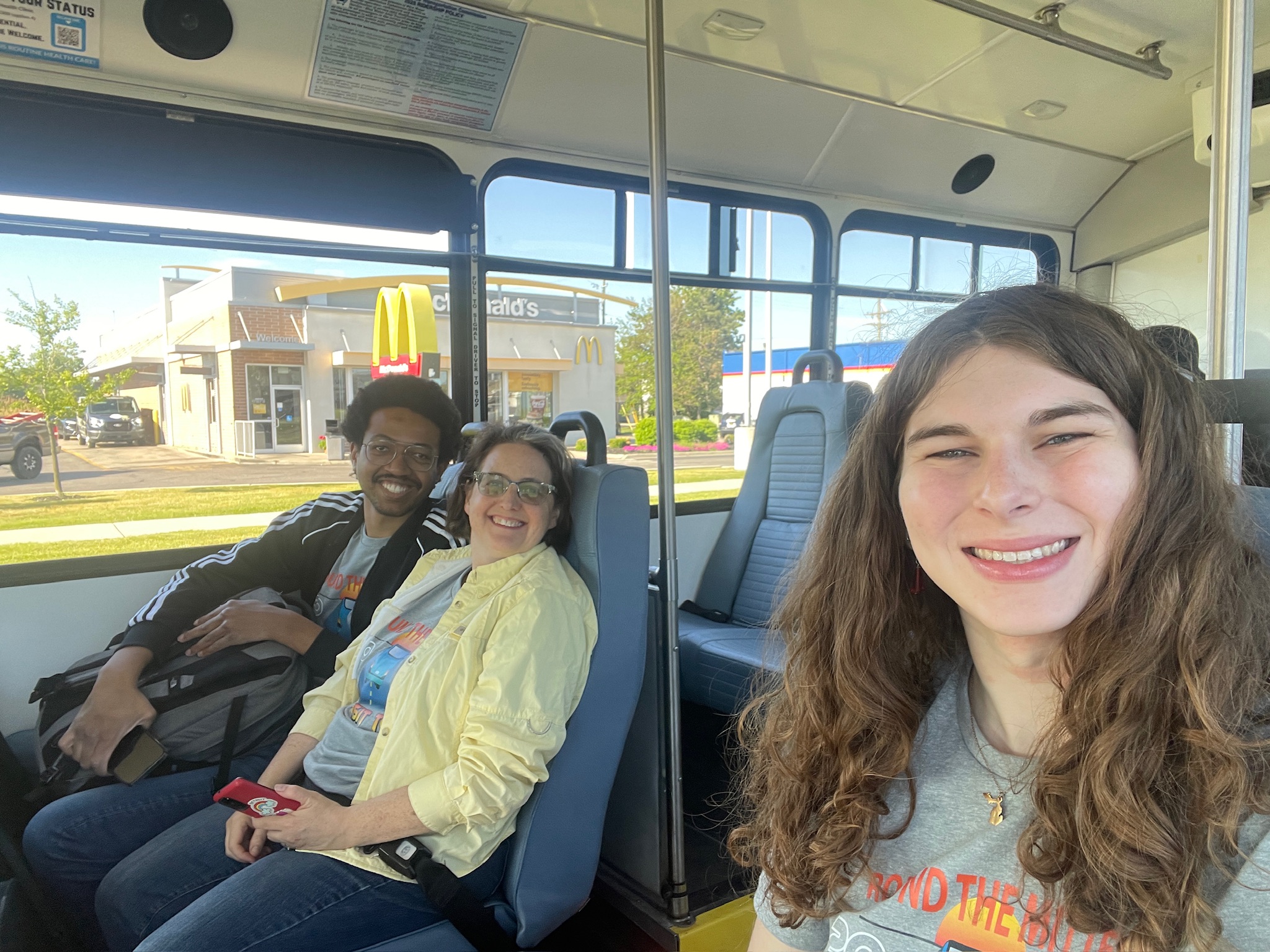
Getting to Grand Rapids from Traverse City was extremely mundane after our Upper Peninsula bus adventures. This time, our food stop was at McDonald’s, and our only formal bus stops were at the Cadillac Wexford Transit Authority’s HQ, and Howard City’s bus shelter; the rest are at gas stations or retail establishments with limited markings and passenger accommodations.
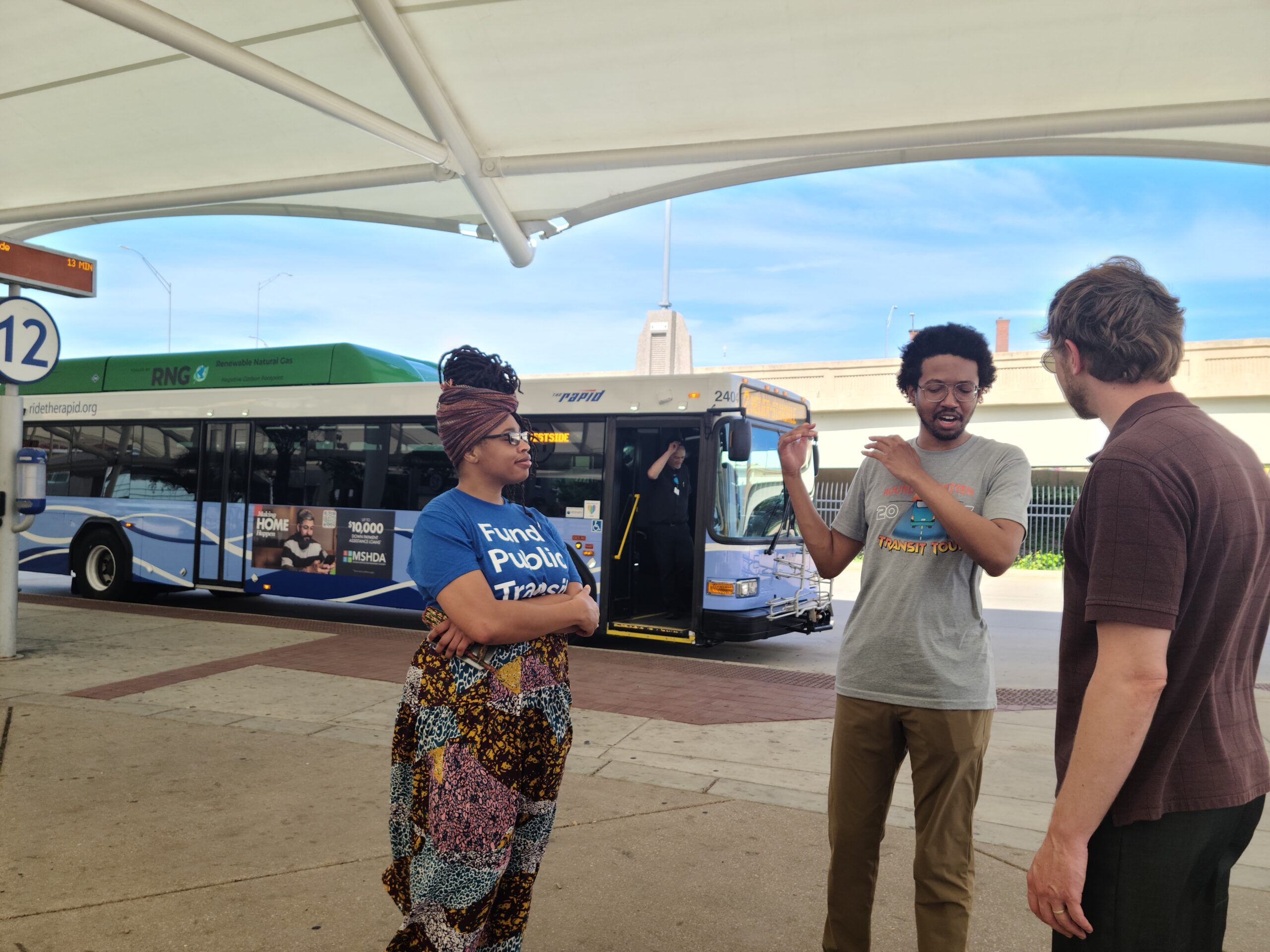
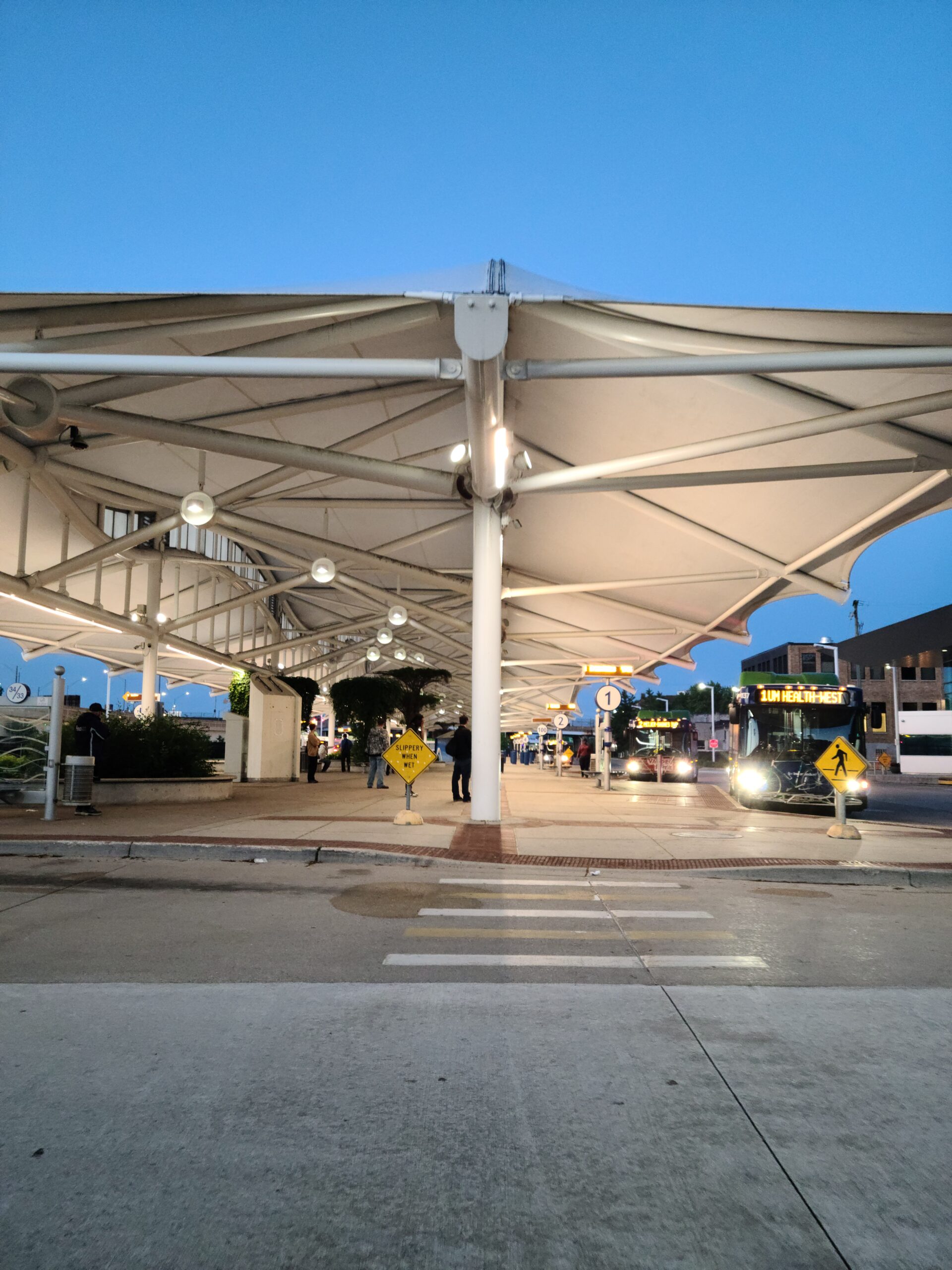
Arriving at Rapid Central Station was a nice experience, though. We walked out into the area and were able to grab some lunch, before getting an operational overview and tour of the station and headquarters from a few members of TheRapid’s planning team. Of particular note was the fact that TheRapid’s fleet is almost entirely running on compressed and renewable natural gas. We also talked about BRT, the redesign of the DASH downtown circulator system, the upcoming millage renewal, and system design as a whole. The final note in our tour was among the most interesting; as part of a remodel of Rapid Central Station, theRapid will be opening a massive daycare primarily targeted at folks who are commuting; the idea is they can leave their kids at the daycare and go to work for the day before picking them up on the way home. And as of now, this daycare center is open!
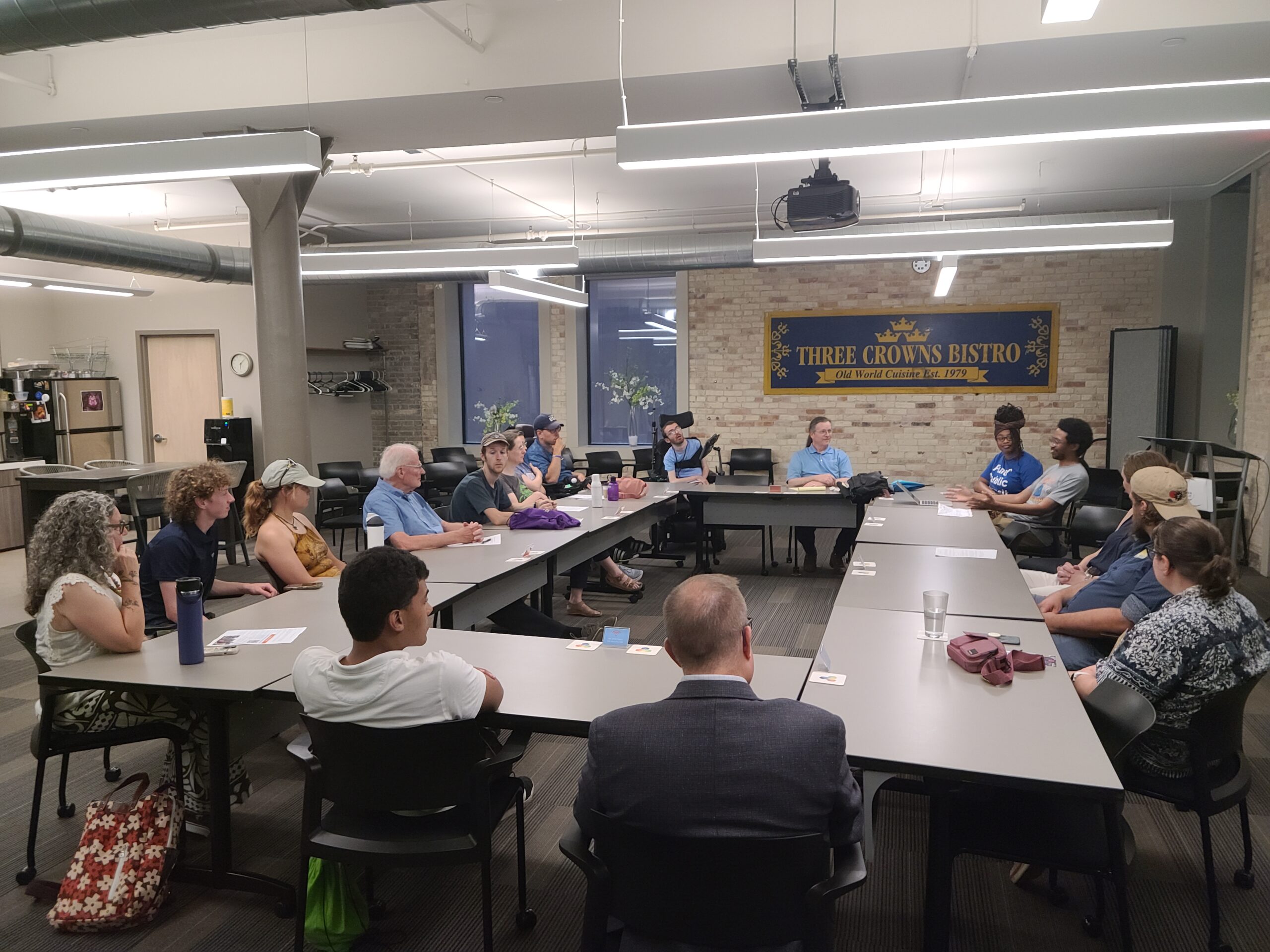
After our tour concluded, we would end up taking the DASH over to our next meeting, which was at the offices of Downtown Grand Rapids, Inc, about a half-mile away. There, in partnership with Disability Advocates of Kent County, Strong Towns Grand Rapids, and the Essential Needs Task Force, we held a community conversation that centered on transportation access around Grand Rapids. We learned that there are some neighborhoods with pretty phenomenal service, but that a lot of the more suburban parts of town struggle with their frequencies and availability; also, a patchwork of opt-outs stymies service from extending into Kent County. On top of this, there are a number of accessibility concerns with driver training, increasing the number of truly accessible stops, and improving the quality of last mile infrastructure, there was also a desire for improvements within the GO– Grand Rapids’ paratransit scheduling system.
June 12 – GR to Benton Harbor & St. Joseph to Kalamazoo
Benton Harbor & St. Joseph would end up introducing a level of convolution to this trip that even manages to give the Upper Peninsula a run for its money.
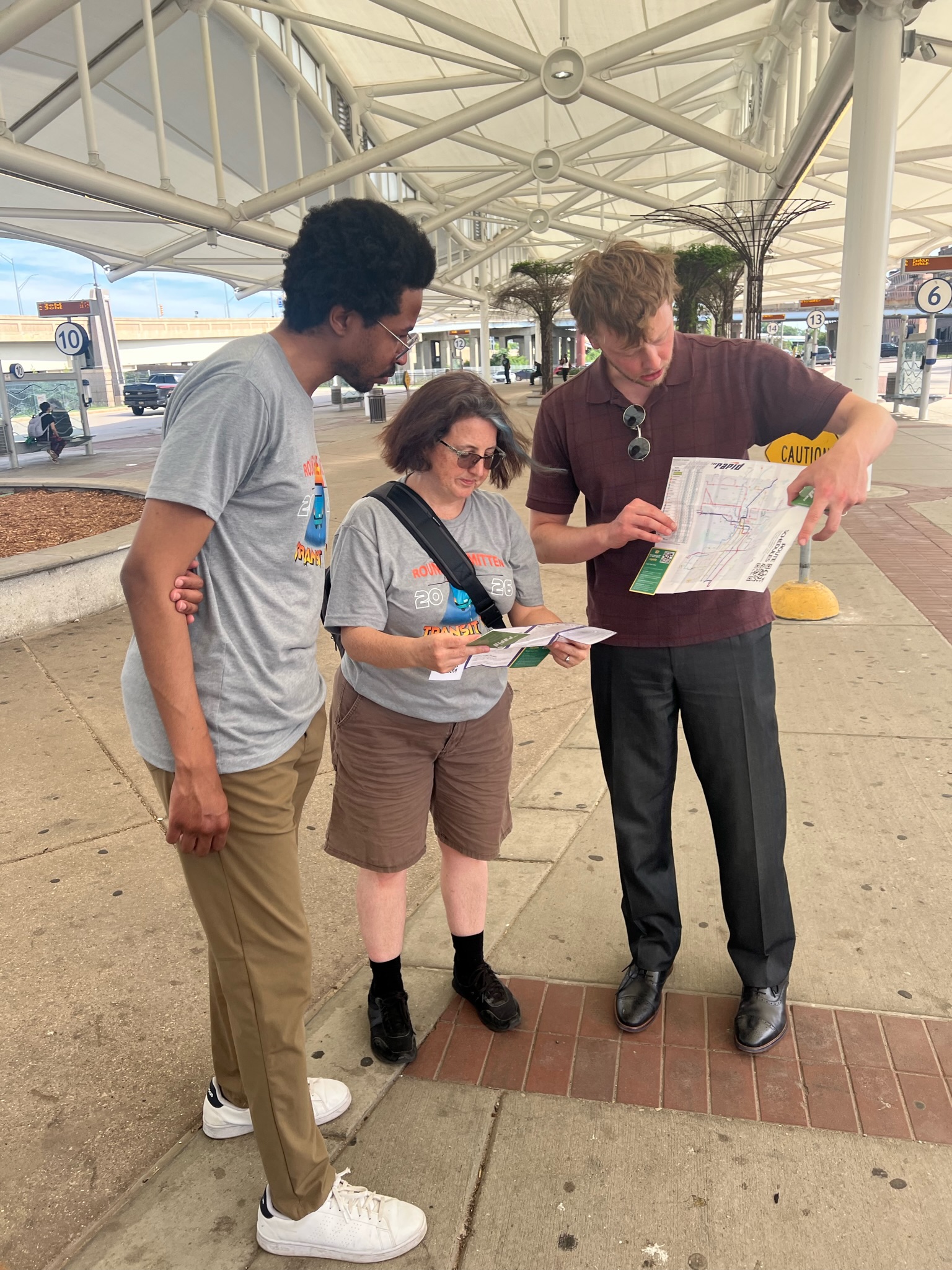
Our train was supposed to depart Grand Rapids at 6am. We ran from our hotels to the station only to learn that due to the terrible weather systems of the last few days, our train had been cancelled. On top of that, replacement buses were cancelled due to them already being distributed to assist with replacements on other lines. A number of folks in the station received this news with real consternation; a senior woman headed to meet her grandkids who now had to delay her trip at least a week, a group of Mennonites who suddenly had to find a new way to their destination… even with such an inconvenient schedule, the train is still such a lifeline for folks in Grand Rapids.
After strategizing, we realized we could get a rental car from a shop along one of the bus lines. So, we went back to Rapid Central Station, caught our buses out to the rental place, and picked up a car. We then made the drive by car rather than train, arriving quite a bit later than we anticipated.
We stopped at Forte Coffee for our community conversation, where we would primarily end up chatting about the overall transit situation and some ideas we’d seen for transit millages in metro Detroit. We also took note of St. Joseph’s downtown paid parking policy, which was just re-instituted in May of this year, after major changes. We also noticed the Shop & Shore trolley, a beautiful red trolley that runs a 30 minute loop to 4 stops in St. Joseph and Benton Harbor, and is operated by Visit Southwest Michigan. It would be amazing to see frequency on this service doubled, as well as greater integration with the local transit network. In many ways, this service is like a proto-version of the Port Huron tour trolley. It would be amazing to see versions of in more cities around the state and country.
Our second event of the day in Berrien County was a conversation with stakeholders from across Berrien County on developing local coalitions in support of transit. Berrien is in a very unique place right now, as one of its agencies, TCATA, is being threatened with dissolution due to long-term financial struggles, and MDOT wants the county to create a new transit authority that could coordinate and in ways coagulate things between the existing agencies. Things are complex, but we had a productive conversation with a lot of constructive dialogue, and it seems like the folks at the table want to make a concerted effort toward consolidating and improving area transit.
After this conversation, our team split up. One of us drove to Kalamazoo in the rental car, as there was nowhere in Berrien we could return it, while the other caught a ride to the Benton Harbor Bus station, so we could keep the Transit Tour on transit.
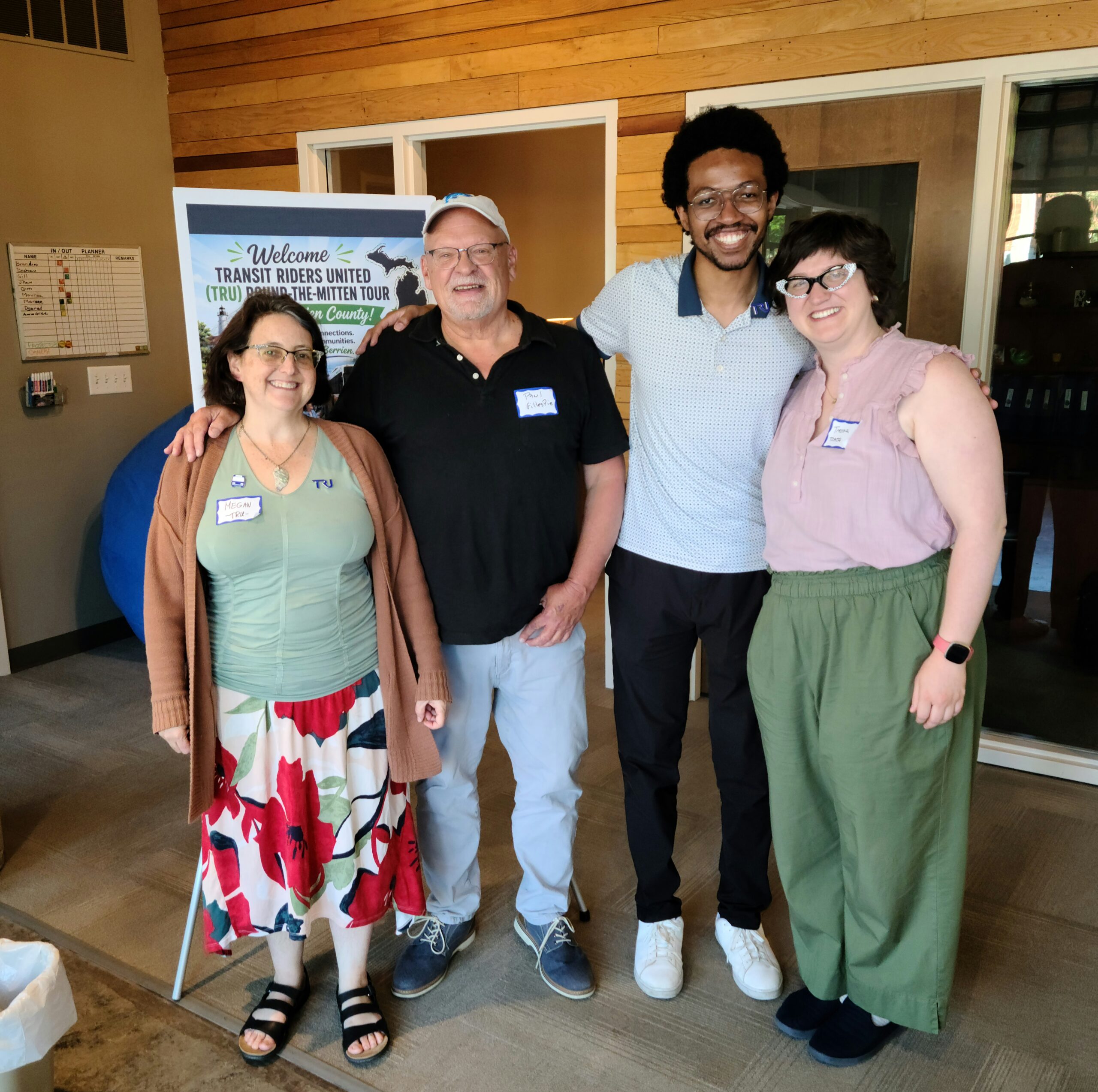
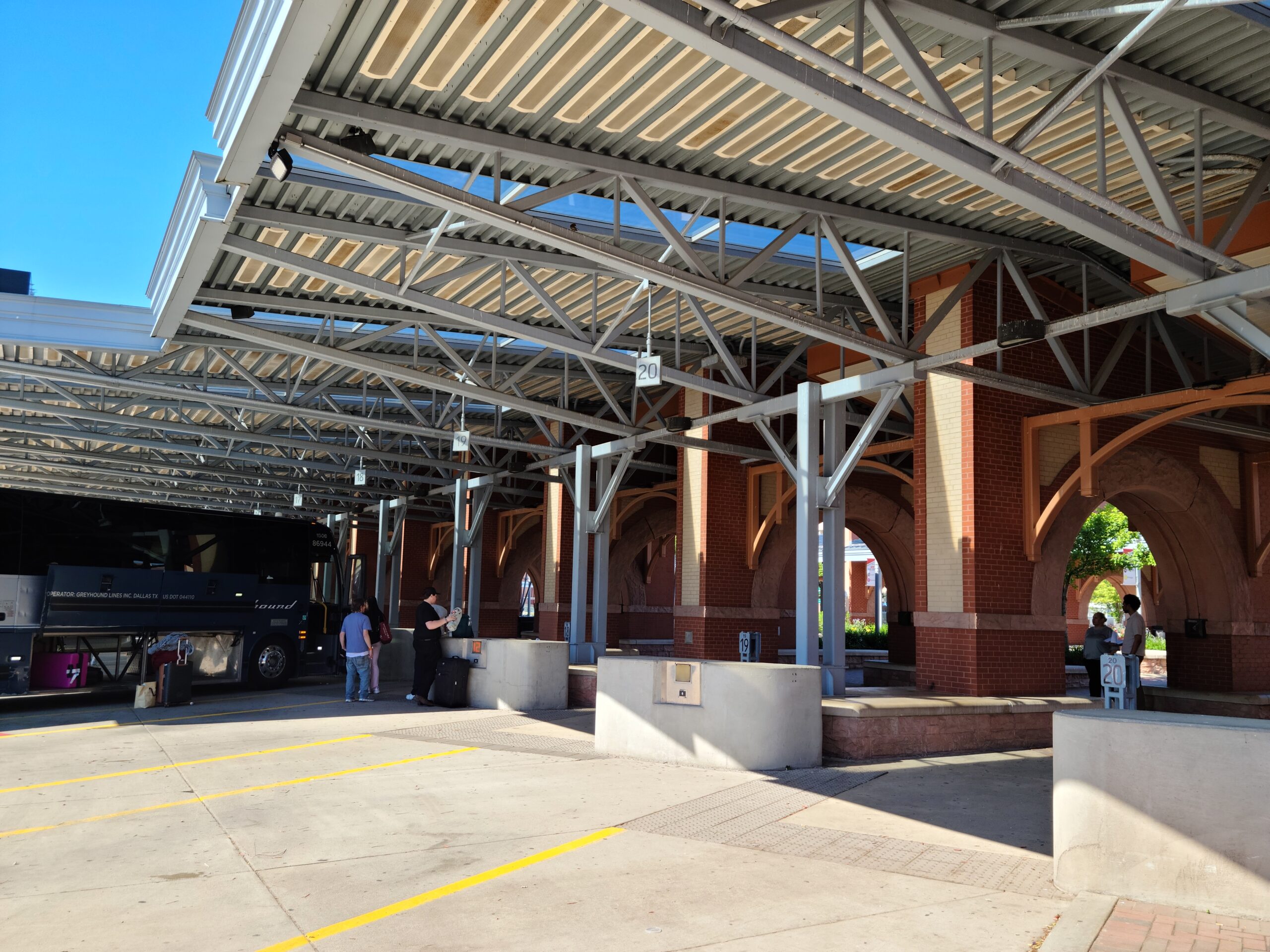
The Greyhound from Benton Harbor to Kalamazoo was smooth and convenient. When you arrive, your bus drops you off right at Kalamazoo Metro’s Transportation Center, a beautiful train station + bus transfer center combo with ample space for vast numbers of folks to wait. Unfortunately, if you’re in Kalamazoo and the ticket counter is closed, the only way to pay fare is with exact change or by using the vending machine to get tokens; however, the vending machine only accepts $20’s. So, I put $20 in the machine, got my tokens, and caught the bus to the hotel.
June 13 – Kalamazoo
The next day, we caught the bus from our hotels to the transit center downtown for a tour. There, we met with Keshia Woodson-Sow, Kalamazoo Metro’s Chief Operating Officer. She provided us with a full walkthrough of the Transportation Center, bus depot, and headquarters facilities. She also explained bus operations, how METRO partners with social service and community outreach organizations, and some cool technology they’ve implemented such as near-collision detectors that actively assist with route design and planning.
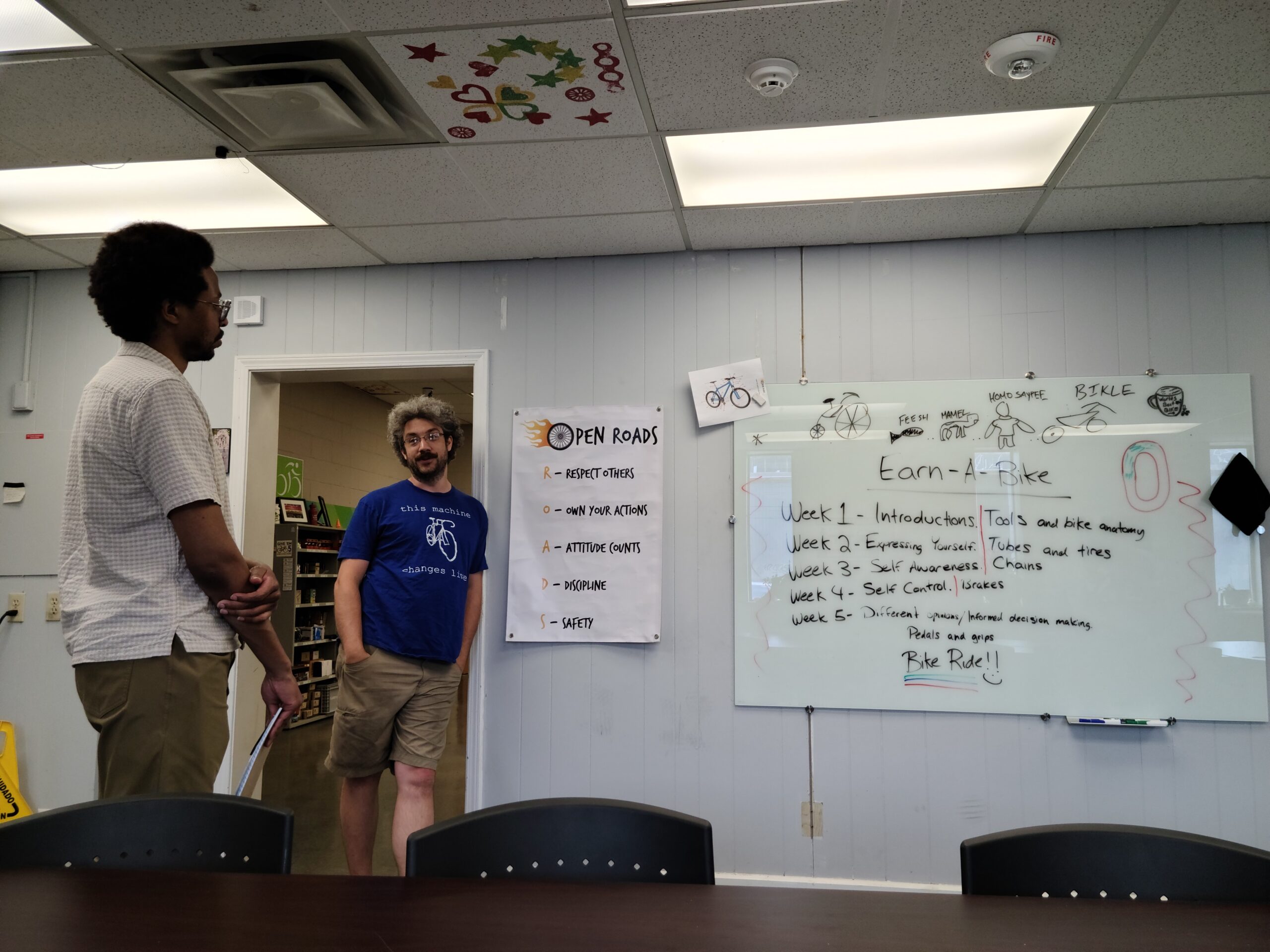
After that lovely tour, we grabbed lunch before catching the bus over to the Open Roads Bike Program’s new facility just south of downtown for a Kalamazoo community conversation on transit. Our bus was off-route due to construction but we were still dropped off nearby; our main concern came from the fact that the detour wasn’t updated on maps.
At our event, conversation participants oscillated between describing Kalamazoo’s transit as adequate and failing to meet needs. Everyone essentially agreed on the need for more service and more funding, but there were also thoughts on addressing cultural issues where many folks are unaware of the transit options that are available, how they work, where they go, and how to use them. Folks also wanted better train and general transit connectivity to Detroit and Grand Rapids.
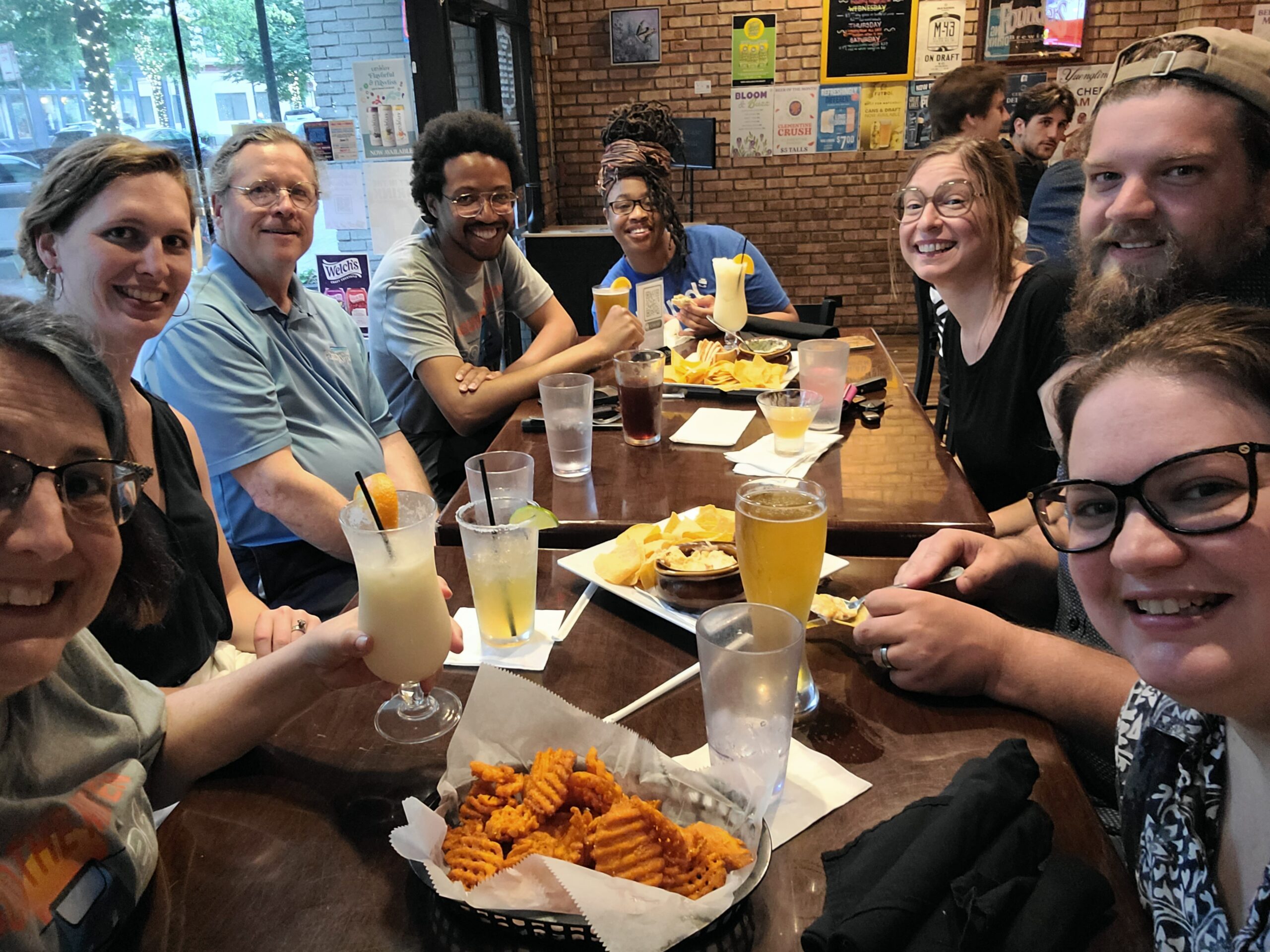
We followed up that conversation with a wonderful happy hour, where we were able to continue digging into those ideas as well as more statewide policy.
June 14 – Kalamazoo to Battle Creek to East Lansing
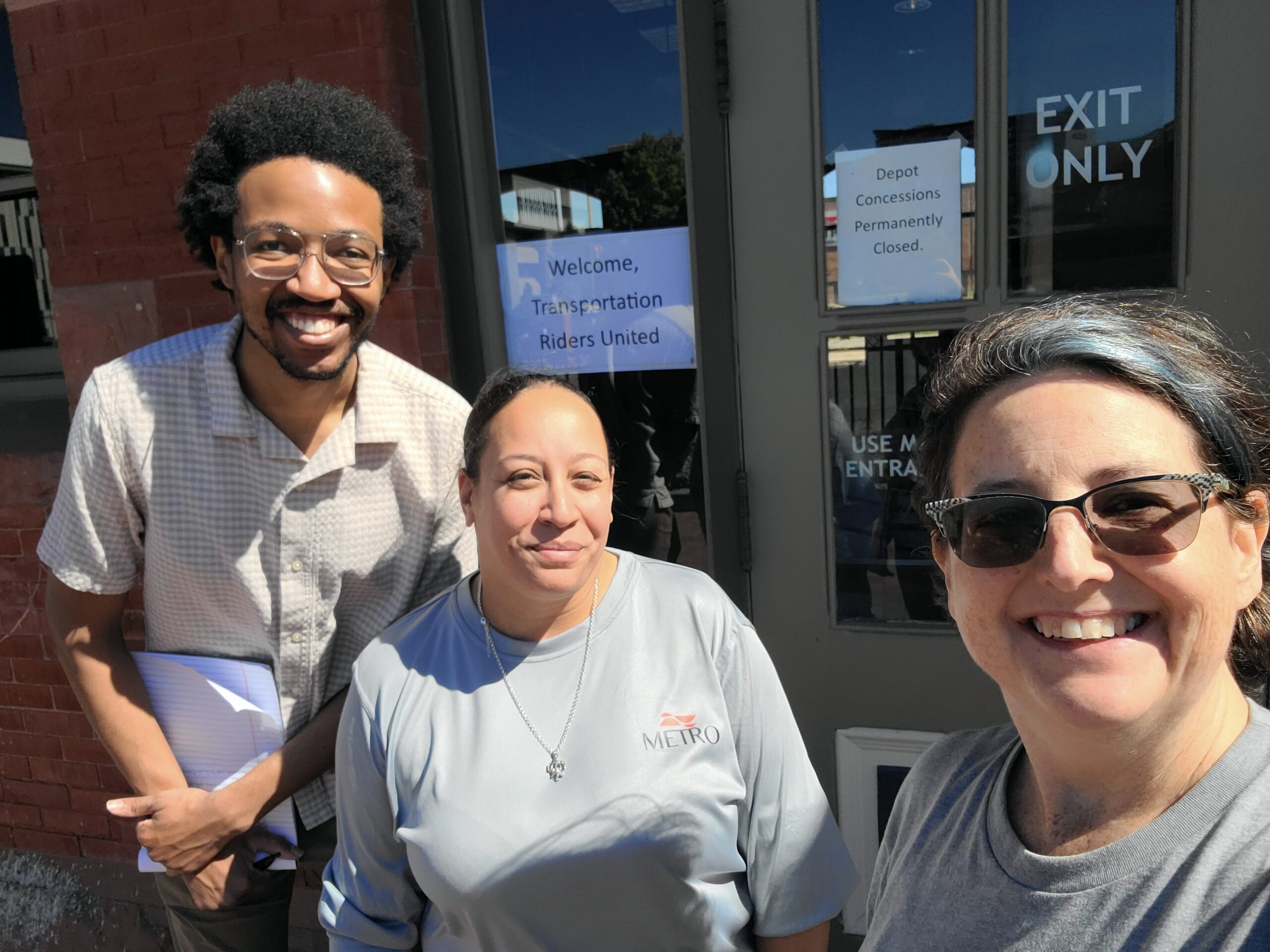
Departing from Kalamazoo for Battle Creek was a rainy experience; almost the type that makes you wish the station awning was much more adjacent to the train tracks. The train was a calm and smooth ride, though it was packed with passengers. In no time I was in Battle Creek. It seems like commuting between Battle Creek and Kalamazoo via transit may be quite feasible, almost commuter rail-esque for some folks with 4 trains in each direction between the cities every day.
Battle Creek’s station is nice, if a bit dated. There’s a patio, vending machines, well-maintained bathrooms, and an ample amount of seating.
In Battle Creek, we received a tour from Mallory Avis, director of Ride Calhoun, and Cade, their Operations and Maintenance Supervisor. They showed us their garage, headquarters (new and old), transfer center, and pretty much everything there was to see. Ride Calhoun is in an extremely exciting transition period as it becomes a countywide agency rather than a city department, and is expanding rapidly. As new millage funding begins, Ride Calhoun is looking to expand its fleet and facilities, restore weekend service, and build a new multimodal transfer center that would combine the bus center and train station into a new building.
After that tour, we were dropped back off at the station, and waited around for our train to get there to take us to East Lansing. The train to East Lansing wasn’t as full as the one we’d taken to Battle Creek but it was still tough to find a seat. We arrived in East Lansing at almost 11pm due to delays with our train. This deeply limited our restaurant and retail options, but luckily our hotel was only about a 10 minute walk away.
June 15 – East Lansing & Lansing to Ann Arbor
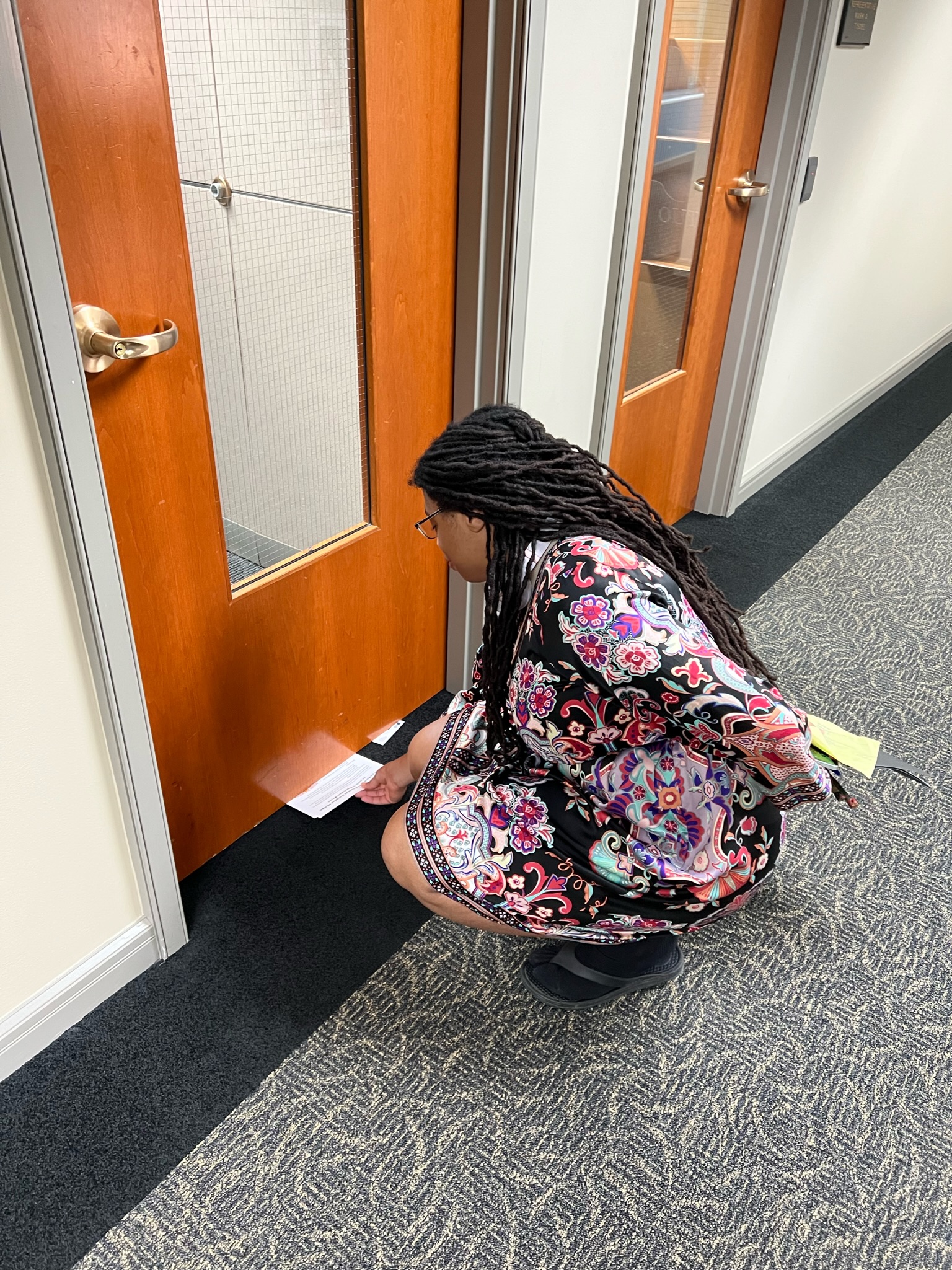
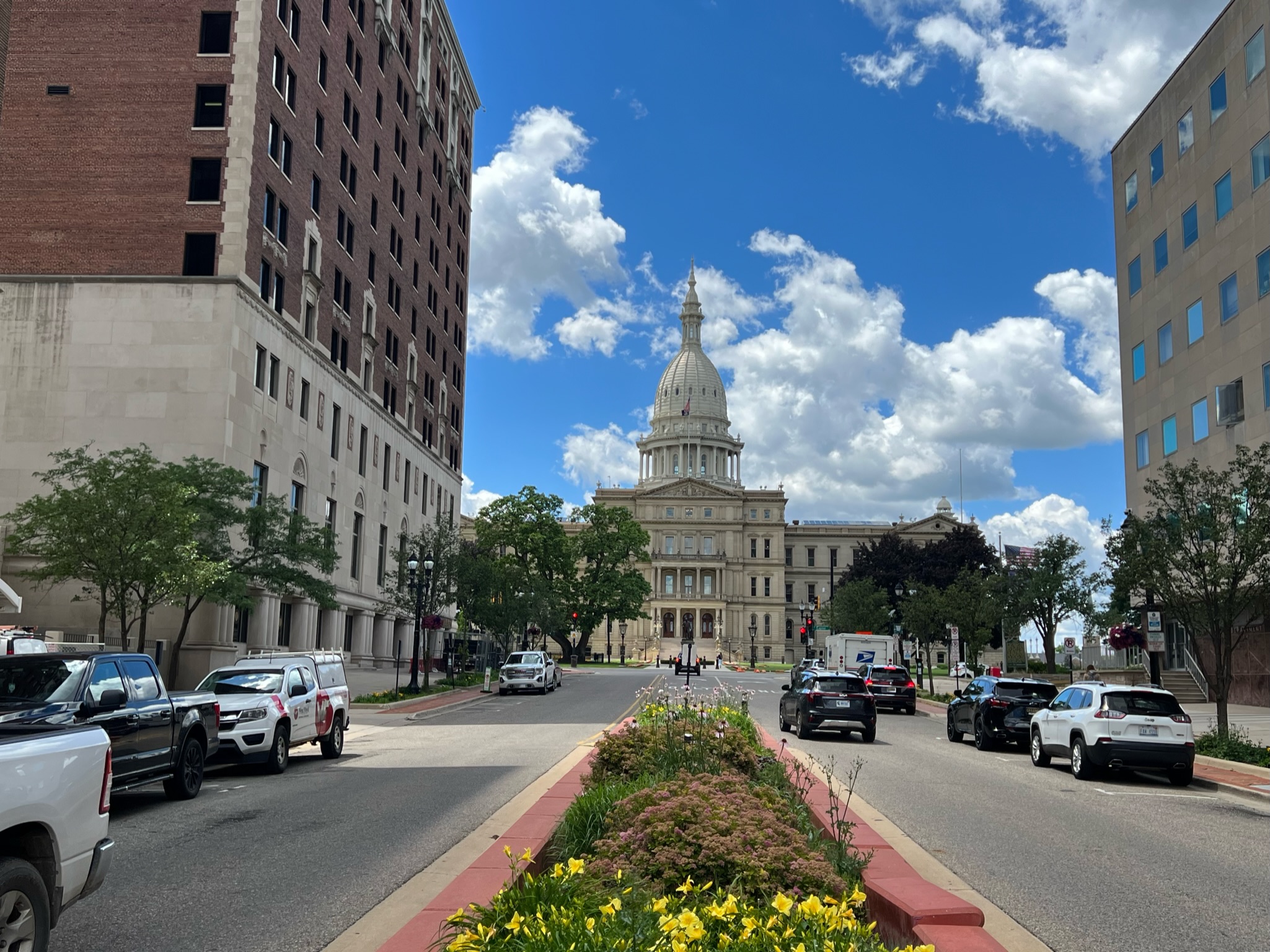
The next day, we spent a lot of time recovering before catching CATA buses to the Capitol to distribute letters on the tour to legislators whose districts we visited. It would be very nice if there was a crosstown route that stopped at the East Lansing Amtrak and in downtown Lansing, but unfortunately there currently is not.
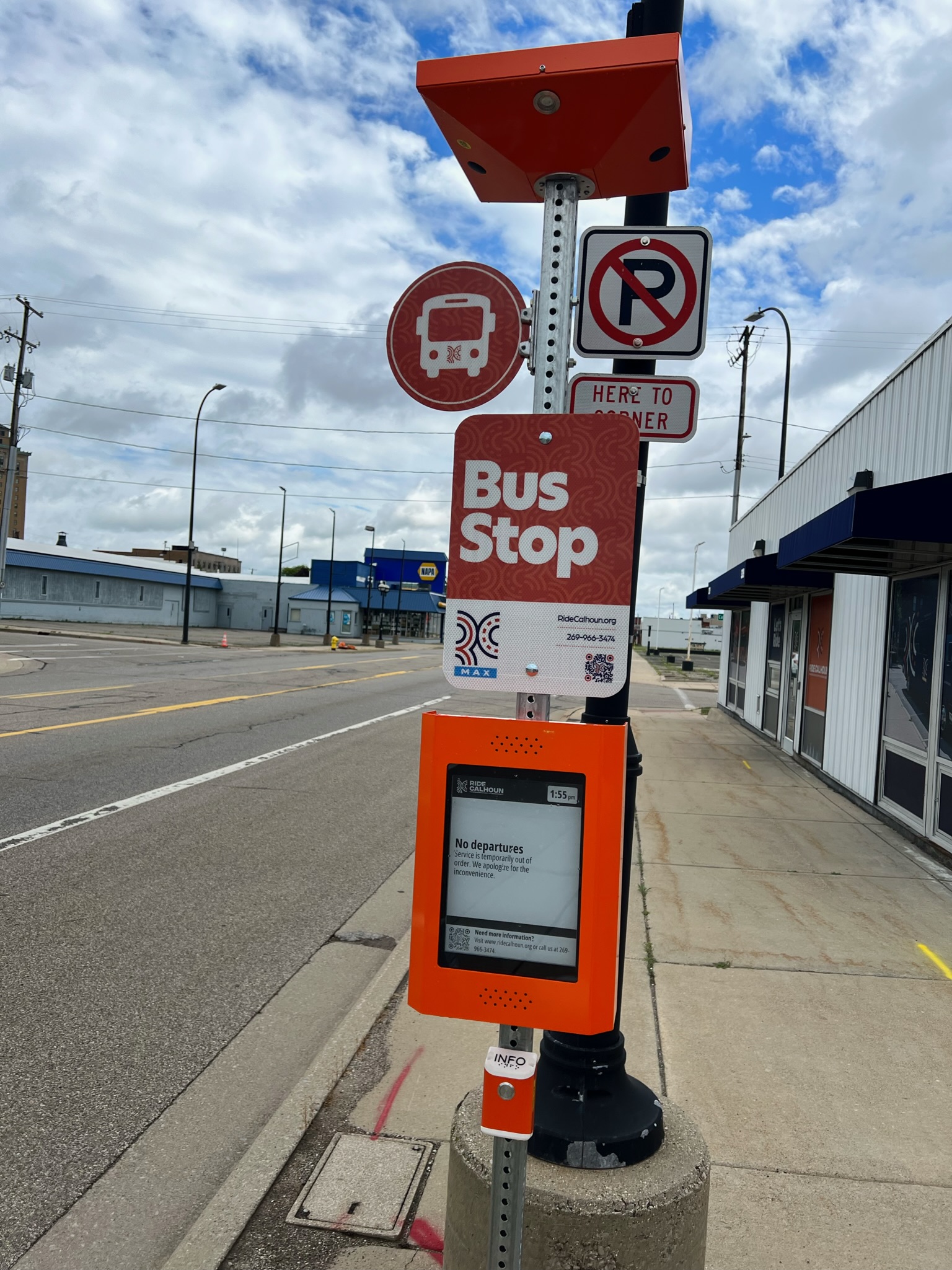
After we finished delivering literature, we split up; one of us picked up food for the road, and the other went back to our hotel to grab our bags from the front desk and bring them to the bus stop. While traversing the city we passed construction along the way, we weren’t sure how that would impact our ability to catch the bus in such a tight window. We were soon made aware that the bus stop we were walking to and the next one along the route were both temporarily out of service due to construction, unfortunately we didn’t find this out until we arrived at the stop. It would be very helpful to riders, in any city, if changes to the route and nearest operational stops were made readily available both in a digital capacity as well as physically on the stop. Lansing has a physical marker on the stop indicating that it is not in service but doesn’t indicate where the nearest operational stop is. Despite a very minor hiccup we successfully accomplished our individual tasks, we met up and did a good bit of eating before getting on the Michigan Flyer to Ann Arbor.
June 16 – Ann Arbor, Jackson, then Home!
After our bus arrived in Ann Arbor, we found our way from the temporary drop-off point (due to construction at Blake Transit Center) to the temporary city bus pickup area, where we boarded our bus toward TheRide’s maintenance facility. There, we met Jeff Pfeiffer, Director of External Affairs, as well as Tony Sclafani, who oversees things in the maintenance department. Tony took us through the legacy of decades of knowledge working for TheRide, learning from folks, improving processes and such; it was inspiring to see someone who cared so much about making sure his team was equipped and supported in doing a great job. Due to the transit center construction creating a need for temporary pickup and drop off locations we found ourselves unsure if we were at the proper location for the Indian Trails bus when leaving Ann Arbor. Prominent signage would help riders less familiar with the area feel less unsure on where the stop is located.
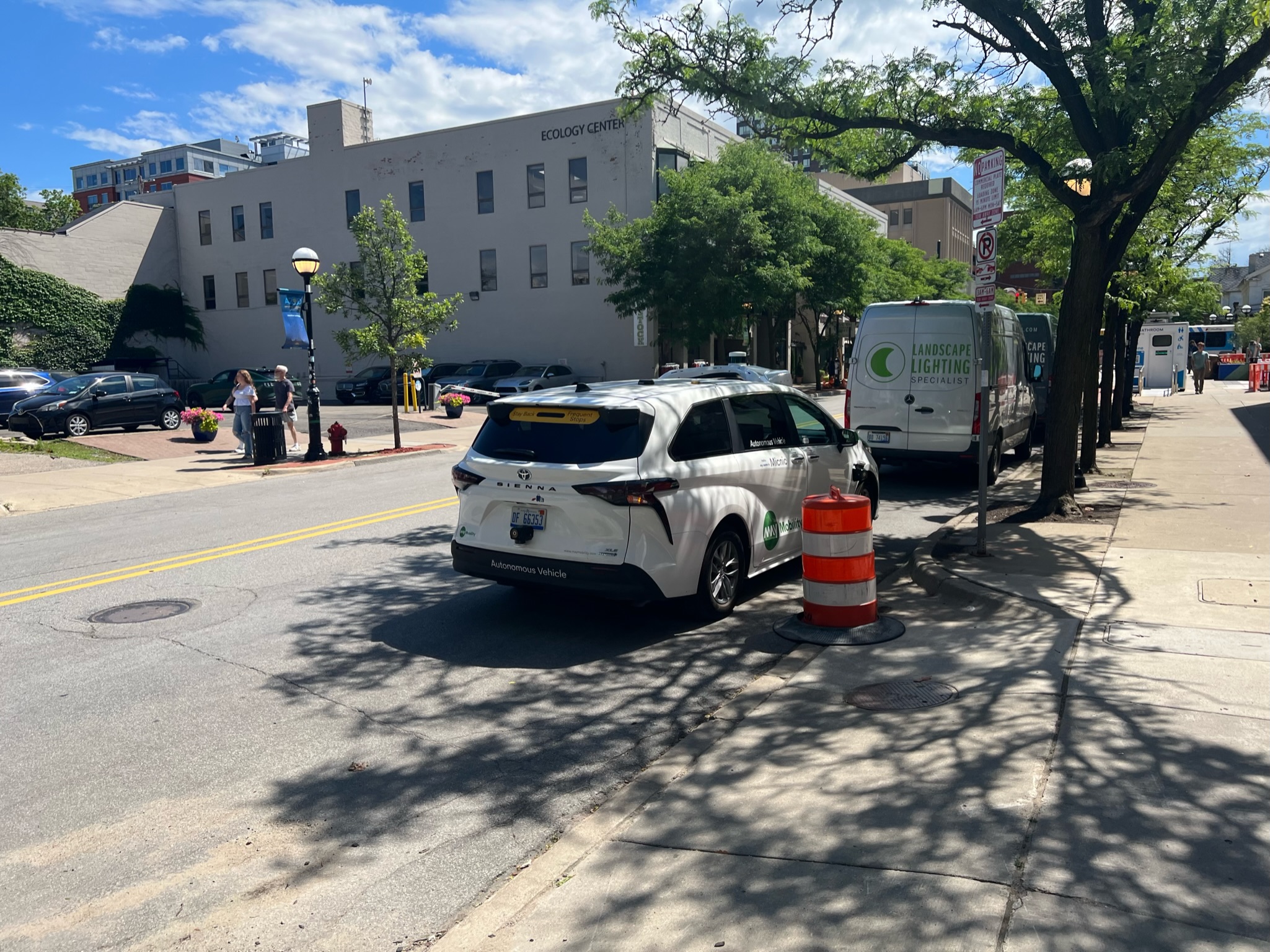
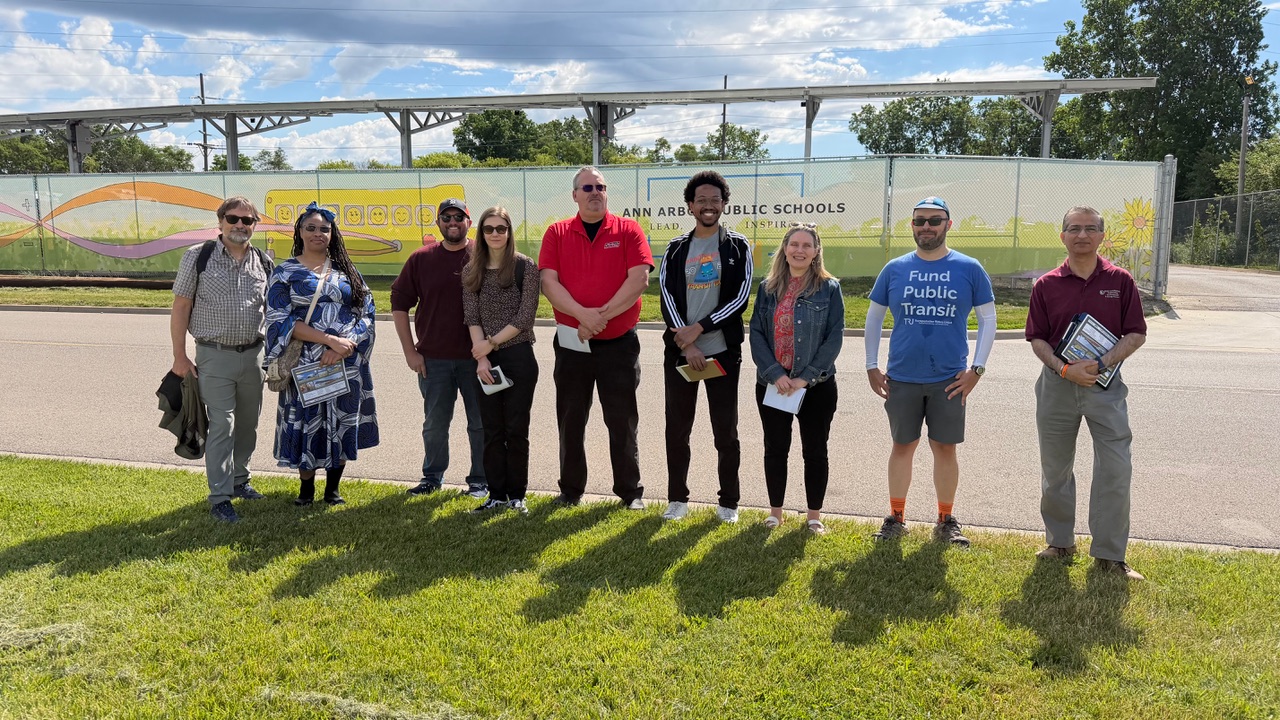
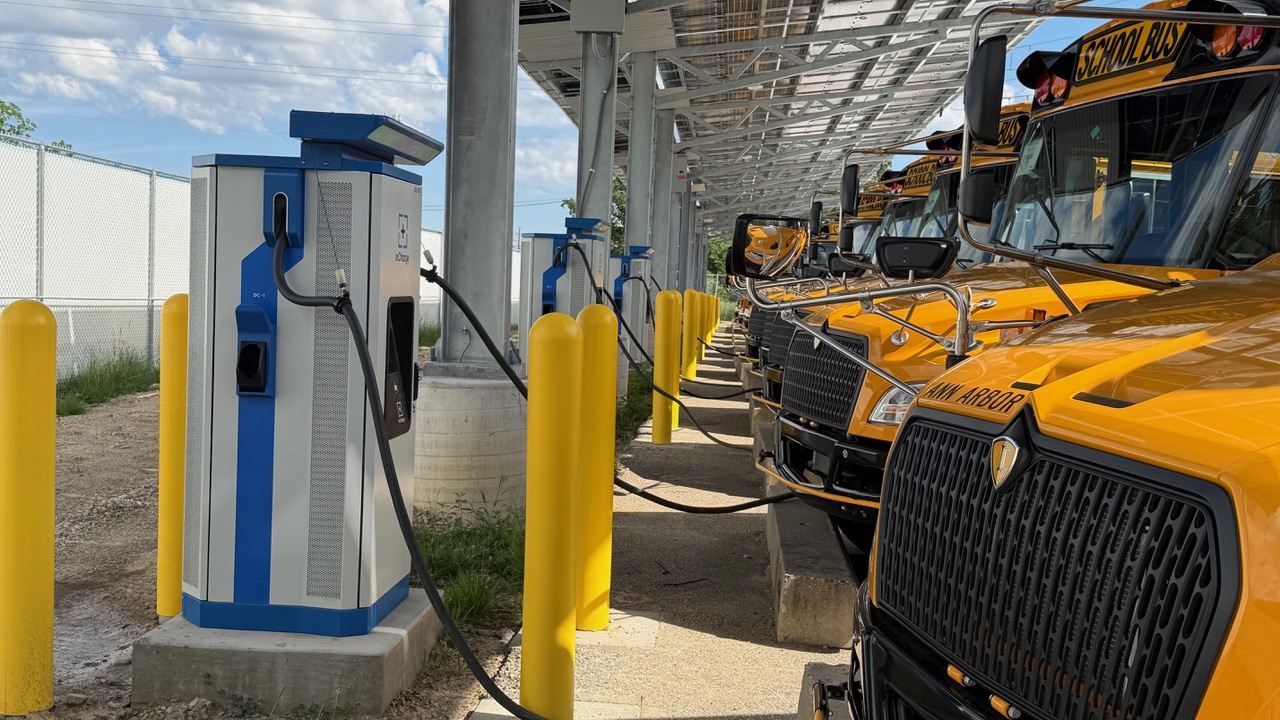
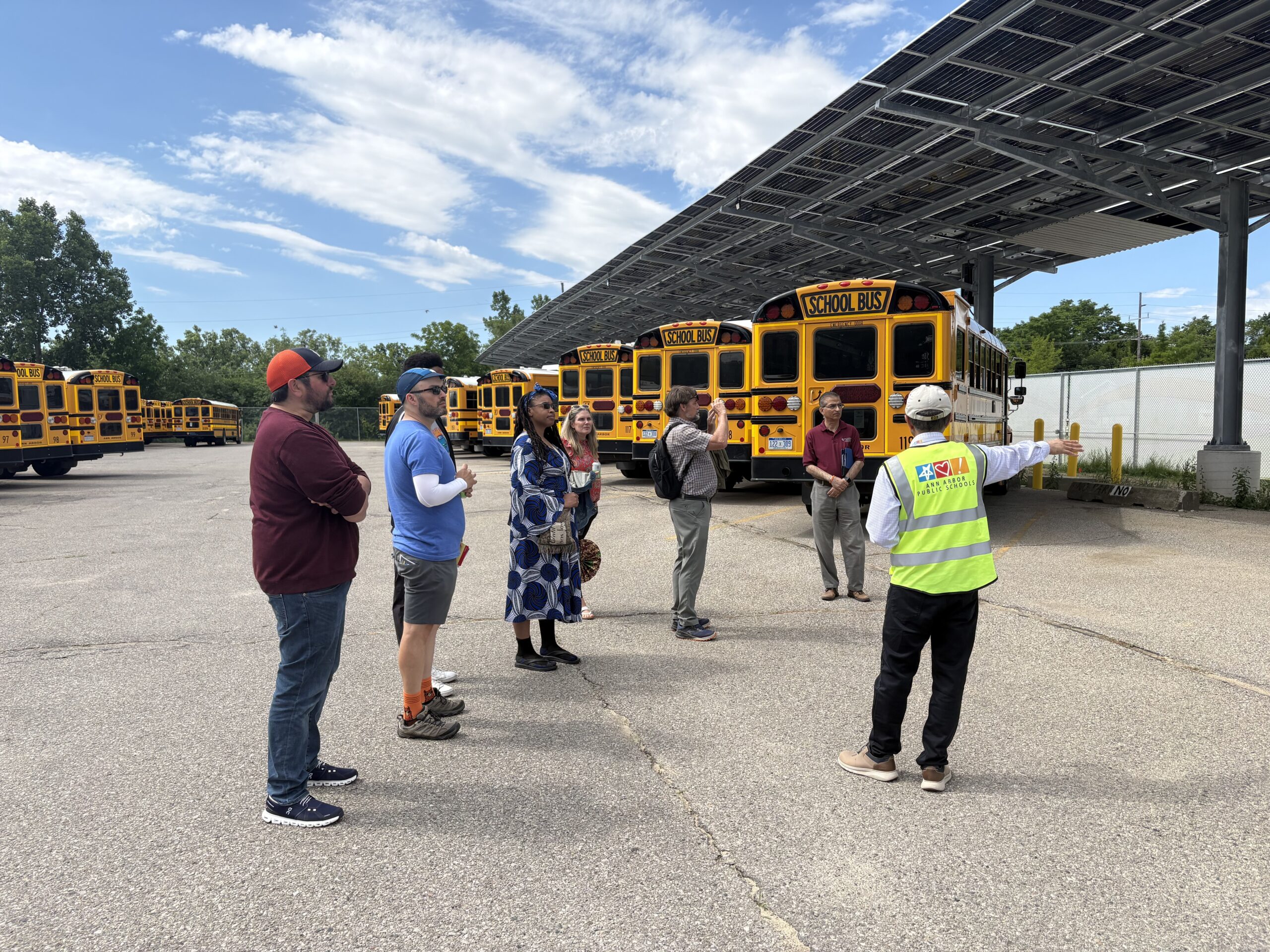
The next morning, we toured Ann Arbor Public Schools’ electric school bus lot with the Ecology Center, featuring 13 electric school buses and a solar charging canopy. After the morning pickup, buses charge using the midday sun and go from a 40% to 80% charge in just one hour. These buses were cost comparable with gas buses due to the stacking of grants by the school district. Kids have an improved ride to and from school through reduced air and noise pollution.
The Indian Trails bus from Ann Arbor to Jackson was such a quiet experience that it felt like a lullaby. At the beginning of the ride, though, we did manage to connect with Phillip, a senior taking the bus up from Ann Arbor to Kinross. He lives up there but his family lives in Ann Arbor, and he told me that ever since his vision started getting worse, he started taking the bus and has taken quite a liking to it.
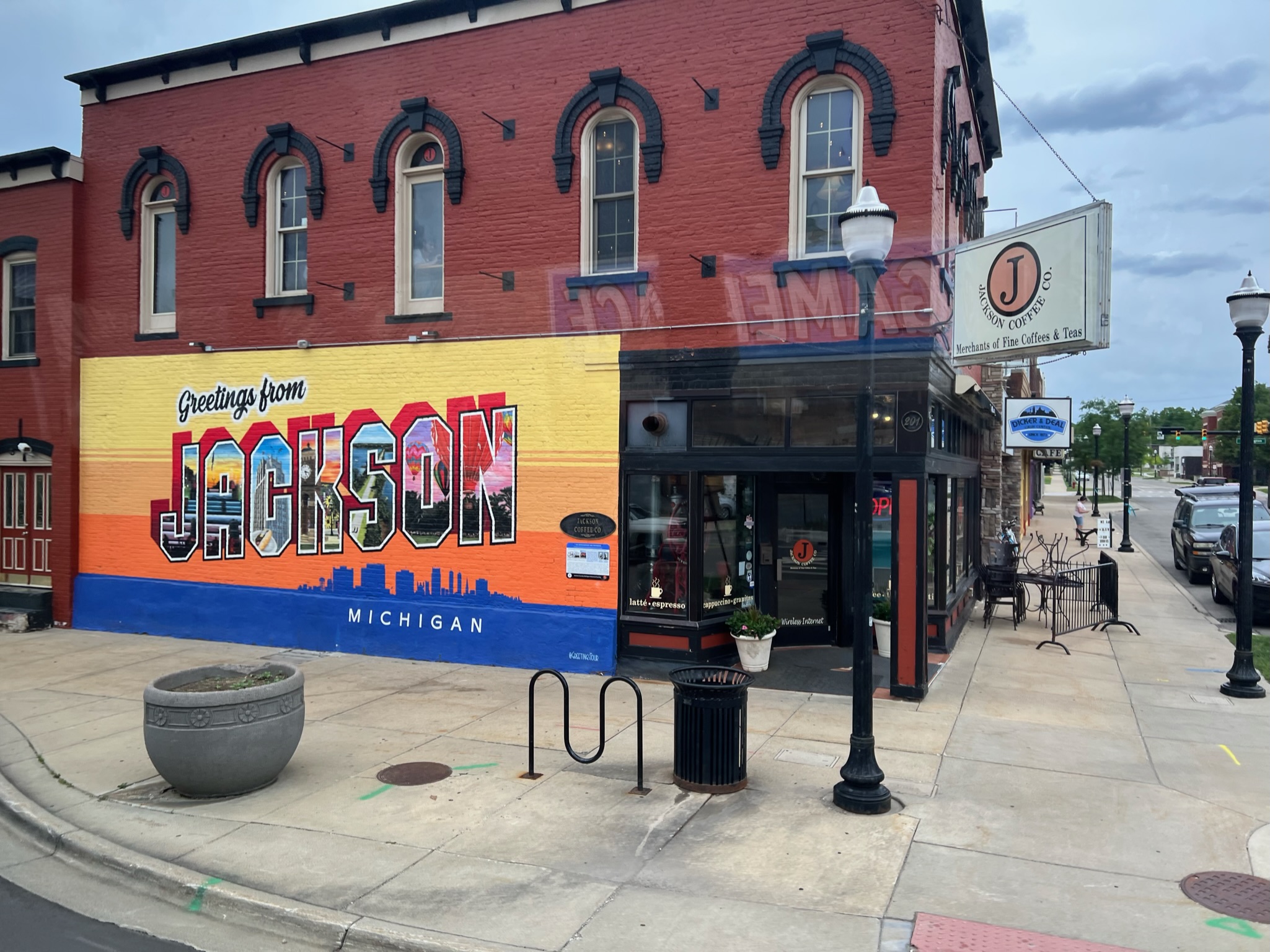
In Jackson, we went on a tour right after we arrived in town. Hunter Causie, JATA’s VP of External Affairs met us and showed us around the transfer center, as well as their garage and headquarters. It was fascinating to see all the JATA vehicles, similar to the Ride Calhoun fleet in Battle Creek, JATA had a few coaches from other transit systems. We enjoyed learning about the expansion of their Rides to Wellness program, and to start seeing the visions for modernizing things as we move toward the future. It was also wonderful to talk about the state of the system as a whole and visions for the future.
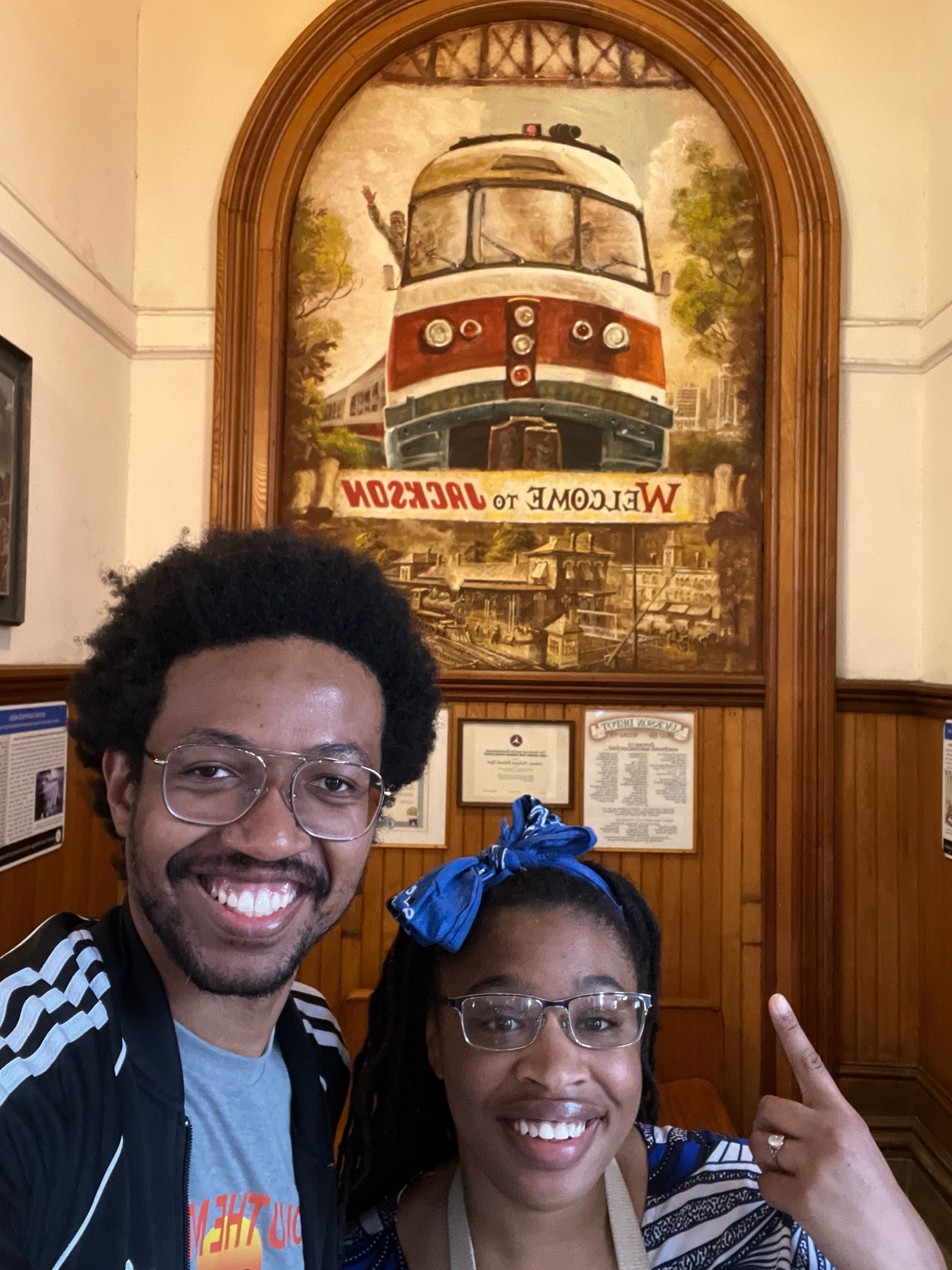
We then caught the bus to Jackson Coney Island, where we enjoyed a delicious, if traitorous, meal. We then walked back to the bus station to grab our bags before catching the bus to the train station. Jackson’s train station is grand and incredible; at more than 150 years old, it’s a true Michigan treasure. A grand mural adorns one of its walls and it truly drips in history; the local historical preservation society has done a great job of highlighting the station’s role in the story of Jackson and the lives of its residents. It was a truly phenomenal place to wrap up the Tour.
The tour finally came to an end at Royal Oak station. There’s something special about stepping off the train onto the embankment that marks the start of one of Michigan’s most significant pieces of rail infrastructure, the 9 grade-separated miles of railroad that run parallel to Woodward between 11 Mile and Martin Luther King Blvd. in Pontiac, and just looking off at the downtown that sprawls before you. One of SMART’s major transfer centers is right across the street, as is one of the area’s most cherished concert venues. There are also a number of wonderful retail, restaurant, and personal service options within a stone’s throw. If you need to spend the night, a hotel is just a 10 minute walk away… for me though, the thought of staying in another hotel made me fondly look forward to seeing my bed for the first time in two weeks!